What matters most is not the numbers but something hidden in his head
Froome’s physiological test data is supposed to be released today. There is much anticipation, particularly in regard to possible doping; but is it really that big a deal?
I think it depends on how you look at cycling. For many it is the be all and end all of cycling. The Pythagorean camp is obsessed with their numbers… and knowing everyone else’s numbers.
The only problem with that viewpoint is that it’s contradicted by the facts.
For one thing, cycling is not a contest of brute strength or even endurance. It’s a game of chess on wheels. There’s strategy and tactics. There’s knowing yourself, your strengths and weaknesses. And just as importantly, knowing your adversaries – their strengths and weaknesses.
And then there’s the biggie…
No doubt you’ve heard me go on and on about it, mindset. In my opinion, what’s in your head is far more important than what’s in your legs. Mindset can overcome a big disadvantage elsewhere, and it can inhibit and erode a big advantage.
Data is but one dimension. In reality there’s a complex intersection of, yes numbers (quantitative factors), but also a universe of mental factors that manage the numbers, apply knowledge of the needs of the rider and the training required, race strategies and tactics.
And behind it all is a mindset that drives the entire enterprise, that craves and demands success… or not.
Data is but one dimension, and probably the least important. It sure helps, but if you’re looking for salvation there, good luck.
Cycling Weekly has a good article giving some much needed context, including counter examples for the “Pythagorean” number worshippers, but is data even half the story? The real story is hidden in head.
Don’t Get Too Excited about Chris Froome’s Data, its Only Half the Story
“If you do what you’ve always done, you’ll get what you’ve always gotten.” –Tony Robbins
That applies to our cycling, our careers… and our foreign policy.
Pro Cycling is Vulnerable
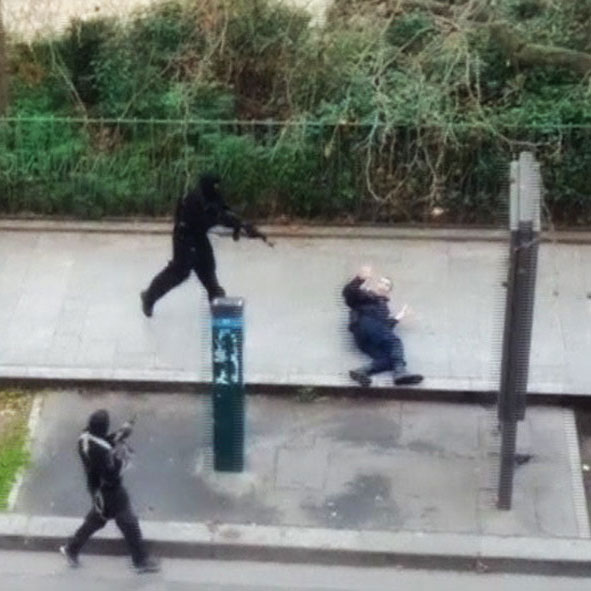
It is a fact. As Michael Rogers points out at the story below, road cycling is extremely vulnerable to terrorist attacks. The events are high profile, packed with spectators, and very easy to gain access to. This has been a concern of mine for a long time. In my opinion there’s very little you can do to thwart an attack.
Nor do I think that such preventive measures are the best response, and nor should they be the business of race officials.
The proper and lasting solution is a principled foreign policy, based not on guilt and submission to foreign powers and entities, but on American self-preservation and the defense of our individual rights.
There is an excellent book that reveals our current irrational policy (under Republicans and Democrats), and prescribes the strategy we need to adopt to win the war against Islamic totalitarianism. There, I said it… Islamic terrorism.
And it’s not just a theoretical threat, because a massacre on a high profile cycling event was already planned (and luckily averted), in Belgium earlier this year:
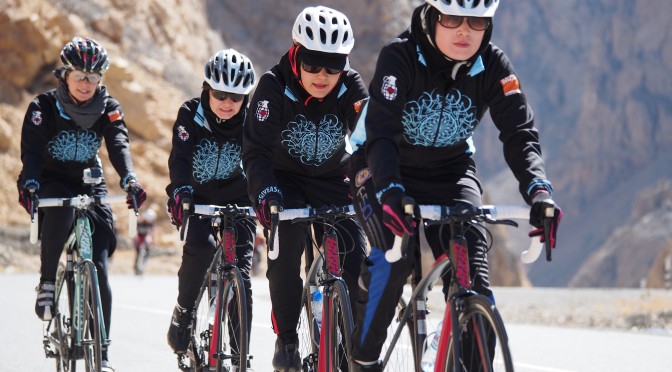
On a positive note, a story I covered earlier this year gets major attention from National Geographic. These women are heroes, intellectually independent and enormously courageous. It’s good to see them getting recognition and exposure.
If you think the road rage is bad around where you live, you should read about the imbeciles these women have to put up with. But still they ride.
Due my workload I almost skipped my lunch run today, but I like to keep it as the one sacred constant in my day, so I headed out for the trail. But it was tough, I had low energy and that sapped my enthusiasm.
My thoughts turned to a couple of friends I lost earlier this year, each had a passion for life and a great sense of humor. I had no doubt they would relish being in my shoes, no matter how bad I thought my day was. As someone once said, every day above ground is a good day.
My mood changed, the tiredness was not gone but it was forgotten, pushed aside and impotent. I chose to ignore it. I picked a work problem to solve, took a few deep breaths, soaked in the sunlight and dancing shadows, then ran on with the purpose of clarifying my problem and coming up with a solution.
I had a good run. I didn’t definitively solve my problem, but I do have some promising options to try.
As I’ve said before, mindset is everything, almost. There’s the matter part too, but…
Mindset makes or takes… your energy, your motivation, your purpose.
In bike racing it’s commonly said that training is 90% physical, 10% mental; but racing is 90% mental.
The strongest rider often doesn’t win, because some other guy or gal wanted it more, and was prepared to dig deeper, and deeper… until everyone else cracked.
With that preamble (I promise to be brief tomorrow!) here’s a good article by pro triathlete and performance coach Danelle Kabush on some tricks to gain control of your mind to have a more successful ride:
BTW, her last tip, on how you’re lucky to be riding in the rain… I’d go further. I used to relish cold, rainy days, because most cyclists would take the day off, and I knew it was a day to make marginal gains on them. It’s not so much how much you do, but how much more you do than them.
There’s no one big thing you can do, but consistency in doing *every little thing* that you can do… pays off big.
P.S. For a good movie on the power of the mind, watch “Touching the Void.” It’s on Neflix, and it’s a true story, the dramatized documentary with interviews with the two key characters involved. When you think you’re having a hard time on the bike, or a bad day, you’ll have a very vivid and concrete example of what a bad day really looks like.
“I attribute this to my success. I never gave or took any excuse.” –Florence Nightingale
Mandatory Helmet Laws and Cycling Safety
There has been a lot of discussion about whether the mandatory helmet laws are a good idea or not. Recently it resurfaced in the Australian Senate. (We’re talking traditional helmets here, not this kind.)
As I recall there are at least three main issues: 1) the effectiveness of helmets, 2) whether they help or hinder safety on the road, 3) whether helmet laws deter cycling in general.
On the effectiveness of helmets, I’ve had at least two concussions… er, that I can remember. The most serious one, referred to as “the alleged accident” at Velo Logic HQ, where I was unconscious and hospitalized, happened taking a gentle corner at 16-18 mph (according to a friend behind me).
Regarding helmets effect on the road, research has shown that drivers give cyclists without helmets significantly more room when passing. (Ian Walker found that wearing a helmet led to a 23% increase in cars inside the 3 ft danger zone, Accident Analysis & Prevention, March 2007.)
In my opinion the issue is easily resolved. As the Aussies say, it’s bloody simple mate, leave it up to the cyclists, let each person decide whether to wear a helmet or not. We’re big boys and girls, we can make up our own minds and accept the consequences.
This is not a trivial issue, which is precisely why people should be able to decide for themselves, not forced to conform to what politicians and bureaucrats decide is best.
Cycling Demonstration for Fallen Cyclist Disrupted by Bus Collision
In Helsinki a group of 850 cyclists riding in honor of a cyclist killed in a collision with a car last week, were inadvertently part of a demonstration of just how dangerous cycling can be, when a bus ran into the group. Thankfully no one was seriously injured, but fisticuffs ensued between a cyclist and the bus driver.
Last month, Don Lock, a 79 year old cyclist in England was involved in a collision with a car. Details are sparse but allegedly road rage ensued and Mr Lock was stabbed to death.
Sickening. The Argus covers the story “Don Lock is Cycling Through the Pearly Gates:”
Difficult to believe someone could be that callous to a vulnerable cyclist and an elderly and defenseless man.
It’s hard to control your emotions when your life has been put in danger by some thoughtless action by a driver. But what good does it do you, or your family, if you survive the vehicle incident only to lose your life in the aftermath of emotions?
It’s a good reminder (driven home repeatedly by my self-defense instructor), that there are bad people that don’t give a damn and will kill you without a second thought, and that walking away from a confrontation, and getting back home to your family safely, is a win.
Keep your options open, deescalate and escape, because confrontations on the road rarely end well.
I’ve had at least three with drivers. One went well but I had been chasing the car for about 2 miles and had time to calm down and think it through, and when I pulled up alongside the car in the parking lot, it was two young kids. I stayed calm and kept it brief.
Another time I confronted the passenger of a car who had given me the finger as they passed on a mountain road on which I was doing hill repeats. I rode up to them in the parking lot at the top. It was two guys, punks in trench coats. I was tired and in my cleats. Had the guy I confronted decided to fight I probably would have been history. And if I had got the upper hand, his buddy would surely have jumped me.
Back then I had no idea what I was doing, I was just plain angry… usually a good sign that it’s time to walk away.
But let’s assume for a moment a scenario when everything turns out in your favor, you get into a confrontation, he’s not armed, has no friends, you go at it and you kick his butt.
What then? What do you gain? So you won the physical fight, that’s the easy part, it usually only lasts a few seconds. Then comes the legal fight, and that too has its cost, financial, psychological, it could take a months or years to resolve. It could even cost you your freedom.
It’s at least worth thinking about now, because when tempers flare on the road, it’s usually too late. As it was for Mr Lock.
Not what I planned to write about today but there you go. Had a road rage incident? Tell me about it.
Let’s try to keep brain engaged and fists holstered.
Ever had one of those workouts where you feel like crap at the beginning, but you persevere, and it ends up being a great workout? I had one today on my lunch run. I’m pretty sure much of it is in your head.
As I hit the trail I was thinking about how I had recently been ripped off with an online purchase (never received the goods), and how I should respond. 10 minutes later I was struggling and found myself walking.
I recognized what was happening and shifted mental gears. I looked down at my soaking shirt. It was from my first ultra (which was a real struggle!), and reminded myself if I got through that, I sure as hell could get through a few miles at lunch. Besides, I am planning to do another ultra in a couple of months so I’d better start behaving like a freakin runner.
I focused on form and treading lightly and quickly. I decided to run hard up the (short) hills and recover on the descents, even walk if I had to. I did. No problem, that was the deal. And if it was going to be a struggle, so be it, I wasn’t going to mope about it and shuffle along, I was at least going to put up a damn fight and run with conviction.
AS I settled in to a steady pace I set the goal of making some plans for Velo Logic and growing the audience. In the last half hour my mind wandered a bit and I formulated an idea for a new product. I got excited.
Then I realized I was rolling along at a decent pace, and feeling strong. What a turnaround.
That’s happened to me many times, on and off the bike, often when I start out riding the trainer; and it’s probably happened to you. I’m sure if I had continued to seethe at the thought of getting ripped off, my run would have stayed a painful, run/walk ordeal, and I would never have developed the idea for some new stuff for Velo Logic.
The mind is our most powerful tool. We fuel our bodies, often we fail to do the same for our minds.
My advice… when you have one of those rides, don’t give in to that first impression. Maybe its legit, often it isn’t. Recognize that the sluggishness could evaporate in 10-20 min, and don’t quit.
Shift mental gears, think of a time when you had a great ride, and know you will have one again. Think of an upcoming event, perhaps a competitor you’d dearly like to beat, and imagine him on your wheel. He ain’t going home with his tail between his legs, are you?
And even if it turns out to be a hard, grinding ride, it’s still made you stronger, tougher, especially mentally as you’ve flexed and worked out your mental muscle.
One thinker said it well, “Ideas move man. Man moves the world.” It’s true, what we think has a huge impact on us, on a ride, in sport in general, in life, and throughout the sweep of history, ideas drive progress… or undermine and enslave.
Two years after Lance Armstrong’s doping admission made a mockery of professional cycling, not much has changed. That is the conclusion of the long-awaited report from the Cycling Independent Reform Commission (CIRC), which cost £2m to tell us what many already suspected.
Even the much-vaunted biological passport has not deterred the dopers. Introduced several years ago, it gives each athlete an individual electronic record of their blood and urine levels to make it easier for dope tests to spot deviations from the norm in each individual case. But the CIRC report found that cyclists simply take micro-doses to leave a minimal trace on the record.
So the current anti-doping system isn’t working, and by my rough calculations based on the income of the World Anti-Doping Agency and national equivalent organisations, it costs the world upwards of £50m a year across all sports. Continuing in this vein means throwing more money at something that seems impossible. So if our top-down, heavy-handed, science-driven anti-doping policy hasn’t worked, what are the alternatives?
Option 1: permit riders to dope
One obvious alternative is to abandon the pretence of clean sport altogether. This would arguably respect the traditions of the sport: back in the 1960s, for example, the world-leading French cyclist Jacques Anquetil favoured this kind of liberal approach. The five-time Tour de France winner (before dope tests were introduced) argued that cyclists should be allowed to make their own decisions about doping.
Pro-doping: Jacques Anquetil (Wikimedia)Pro-doping: Jacques Anquetil Wikimedia
Since then, large numbers of cyclists have actively pursued the latest drugs, seeing the authorities that try to stop them as the enemy. This cat-and-mouse game has proved expensive for sport in terms of both finance and credibility, and has led to situations of cyclists being unfairly and inconsistently punished.
While allowing doping would be controversial, there are comparisons. In boxing, for instance, modern-day participants know and accept the risk that they could incur brain injuries. In that sense, if all cyclists accepted the use of drugs in the sport then their decision would be a similar one based on the health risk that such drug use involves.
Option 2: doping under medical supervision
A second approach, in order to mitigate this health risk from doping, would be to allow it only under medical supervision. Several prominent academic health researchers have argued that the present risks would be substantially decreased if cyclists were able to access accurate information on the drugs.
As the CIRC report noted, cyclists often experiment with weight-loss supplements, painkillers and other drugs. It’s well known that turning to black-market supply chains and unethical doctors can increase risks. We also know from the CIRC that doping appears to be spreading into amateur cycling. So rather than spending money on propping up a broken system, why not use it to make medical advice freely available for all cyclists? To help combat the amateur problem, this could be part of a broader public-health strategy.
Like over-the-counter medicines, the approach to doping in cycling would be to assume that individuals could make informed, mature decisions regarding their own health. There is nothing to suggest that cyclists really want to kill themselves for the sake of their career.
Option 3: decriminalisation
What does anti-doping set out to achieve? The argument that anti-doping protects a level playing field or the sport’s image are spurious, as doping is only one small factor that can influence success in sport. There is no level playing field, and the image of sport is constantly undermined by the behaviour of athletes on and off the field. For me, the best argument for regulation is that it helps to protect the health of the athlete.
Without asking the public to become more tolerant of drugs in sport as per option two, instead a compromise might be to move to a lighter-touch process of self-reporting, medical monitoring, and perhaps even a form of doping quality control imposed by team managers.
Cyclists would need to prove they are in reasonable health before they could compete, and would be required to provide information to show they were monitoring their drug use as part of that. But there would be no obligation on the doctors to report such drug use to the authorities, and testing would be reduced and focused on health factors. The system would prioritise risk reduction and support for individual cyclists. This is the option that looks comparatively the most reasonable to me.
Imagine a world that tolerated Lance Armstrong Julien Behal
Option 4: involve the athletes
Even though it might be easier to get the public to accept a decriminalised system, popular (and political) revulsion at the very notion of such liberalisation would still be the greatest hurdle to overcome. So we would need to shift attitudes too.
We should ask professional and amateur cyclists alike about what they would like their sport to do about doping. Remarkably, no one has done this before. After consultation, cyclists may come to feel responsible for the policies they have helped to create.
If they favoured a system closer to the status quo than options one to three, this may lead to some significant self-policing within the sport, and more social stigma around stepping out of line – if cyclists come to believe they are betraying others, they may think twice.
Of course, we can’t know in advance whether the athlete’s majority view would be deemed acceptable by the sport’s governing bodies, sponsors or the watching public. All the same, it would be a genuine leap of human faith to include the subjects of these policies in the policy-making process.
Wherever world cycling goes after the CIRC report, we all need to recognise that the future of the sport might depend on the compromises involved. The starting point must be to accept that more of the same simply will not suffice.
France and the West is under assault from terrorist groups around the world. Now one Tour de France team wants to honor a terrorist during the Tour.
On January 7, 2015, France and the rest of the civilized world, was rocked by a barbaric act of terrorism in the epicenter of civilization, Paris, France. Two Islamist terrorists entered the offices of a weekly newspaper and slaughtered 11 people, and wounded another 11.
The carnage did not end there. In the days that followed there were further hostage takings, murders and injuries.
Exactly one week later, on January 14, the Tour de France organizers announced the teams in the 2015 Tour de France. Included in the roster is the first African-registered team, MTN-Qhubeka.
What has this got to do with the terrorist atrocities a week earlier?
The MTN-Qhubeka team is planning on turning July 18 in to a day of celebration of a political icon. That’s bad enough, but the political icon they’d like to honor was not just any political icon, he was an advocate of terrorism.
The team, along with the Mandela Foundation, would like to celebrate Nelson Mandela.
What most people do not know is that Nelson Mandela’s ANC group was a terrorist organization. The ANC’s goal was to impose Soviet-style communism on South Africa.
In 1961 Mandela co-founded the so-called “military” wing of the ANC, Umkhonto we Sizwe (“Spear of the Nation”).
In 1964, Mandela was convicted on 193 counts of sabotage and smuggling of munitions, including 210,000 soviet hand grenades and other bomb-making materials.
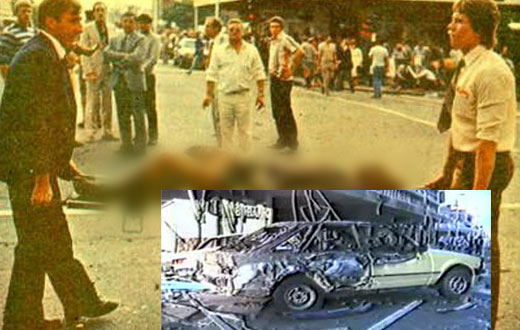
ANC Car Bomb, Church St, Pretoria, South Africa A huge pall of smoke rose hundreds of feet into the air as debris and bodies were strewn around the scene of the explosion… It exploded at the height of the city’s rush-hour as hundreds of people were leaving work for the weekend. Glass and metal were catapulted into the air as shop-fronts and windows were blown out. Many passers-by had limbs amputated by the flying debris. Others bled to death. BBC, May 20, 1983
The ANC and Mandela’s “Spear of the Nation” went on to assassinate political enemies, bomb banks, shopping centers, restaurants, and indiscriminately slaughter blacks, whites, men, women and children.
This wasn’t limited to attacks against military, police and government targets, or even whites. The ANC used violence and terror extensively among the black population to command obedience and loyalty to the ANC, and to exterminate and instill fear in their political opponents.
As despicable as the apartheid regime was, Mandela was not in prison for his ideas or opposition to apartheid, it was because of his acts of violence and advocacy of terrorism. (Many people were opposed to apartheid and were not in prison.)
In fact, in 1985 then Prime Minister P.W. Botha offered Mandela his freedom in exchange for simply renouncing violence. He refused.
In 1986, as if to reaffirm the ANC’s commitment to terrorism, Nelson Mandela’s wife, Winnie Mandela, said, “With our boxes of matches and necklaces we’ll liberate this country.”
She was endorsing the horrific practice of “necklacing,” putting a tire doused in gasoline over someone’s neck, and setting them on fire.
The victim suffered a slow and agonizing death. Eyewitnesses report that it could take up to 20 minutes for the victim to die. Over a thousand people are estimated to have been tortured and killed by necklacing.
In order to defeat the bloody scourge of terrorism, we have to tackle it head on philosophically and militarily. We have to clearly identify it, condemn it, and deprive it of every shred of respectability.
There can be no ambiguity, no appeasement, and certainly no honoring of its advocates and perpetrators.
At a critical time when the West is under a bloody and barbaric assault from Islamic terrorists, at a time when the Parisian atrocity is fresh in our minds; how appropriate is it to turn the Tour de France into a vehicle for celebrating a man who had more in common with those who perpetrated the Paris massacre than with its victims?


 My mood changed, the tiredness was not gone but it was forgotten, pushed aside and impotent. I chose to ignore it. I picked a work problem to solve, took a few deep breaths, soaked in the sunlight and dancing shadows, then ran on with the purpose of clarifying my problem and coming up with a solution.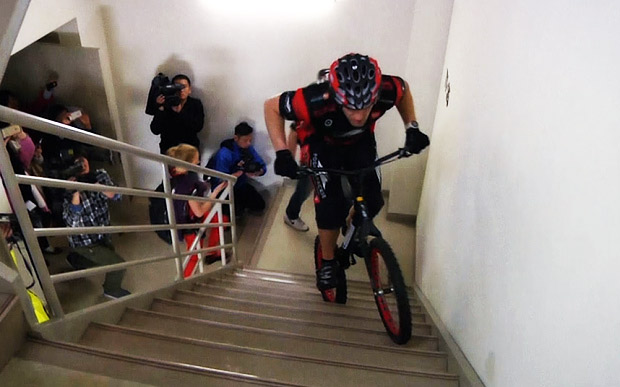
 How Bad Do You Want It?Mastering the Psychology of Mind Over Muscle