
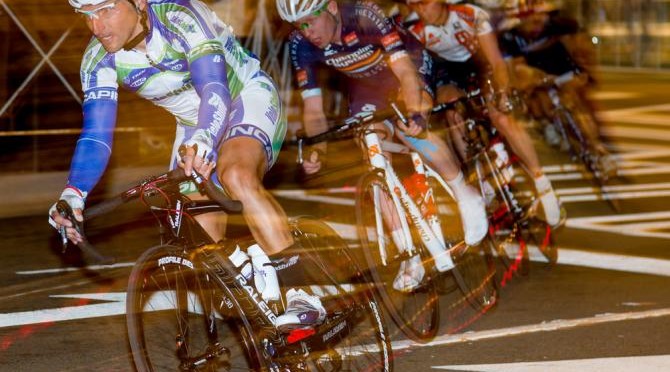
The Global Cycling Network has a great video on how to improve your cycling this off season. What do you want to achieve next season? Here’s some tips on how to make it the best off season ever.
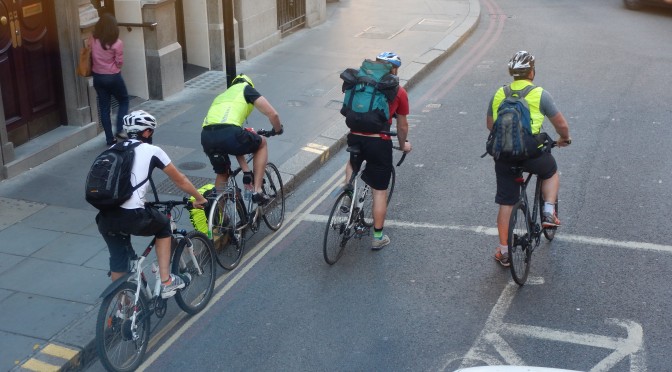
The Most Active Cycling City in the World Is….
This does not surprise me. When I was over in London last year, we took a walk to a local pub. My daughter and I counted the cyclists we saw on the way there and on the walk back. We counted over 110. Most of them looked like commuters.
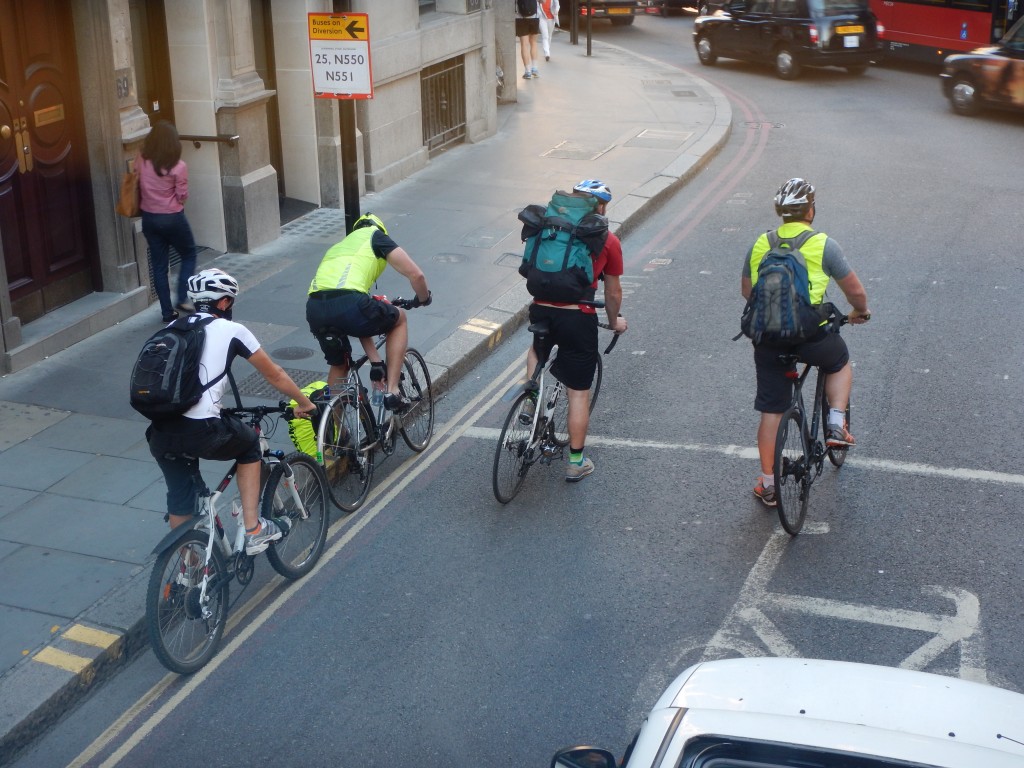
They are everywhere. There’s no shortage of cyclists in the center of London mixing it up in Trafalgar Square, thick with taxis and buses. We also came across a string of cyclists in a mid-week time trial on a rainy day out in the country.
My local city, Charlotte, much much smaller and much less traffic, and with very few cyclists comparative to London averages 1-4 deaths a year. The bustling, chaotic and sprawling London which is thick with cyclists has had just 8 fatalities so far this year. That seems mighty low.
I rode in London in the 90’s while living there, commuting to work, but it wasn’t smack bang in the middle of the city, though my wife and I took a few weekend trips into a busy part of town. We were a bit nervous at first but got over it quickly and I don’t remember any close calls, not like here.
Certainly the cycle lanes contribute to safety, but I’m pretty sure the sheer number of cyclists on the road dramatically raises the awareness of drivers, and makes them more cyclist-sensitive. Whereas here, they look but don’t see.
What you see is strongly influenced by what you’re looking for, and around here most drivers are just not expecting a cyclist, aren’t looking for them and consequntly don’t see them.
And when they do see them, reactions vary from: from curiosity, “OMG! WTF is that?” to amazement, “cool, look a cyclist!!” …and to anger, “What the hell is this kid doing with his toy on the roads?!!”
I’m sure there’s many lessons we can learn from London.
London Crowned as Strava’s Most Active Cycling City
Ivan Basso Pulls the Plug, Levi Loses a Rider
Basso Pulls the Plug
After an aborted Tour and cancer treatment, Ivan Basso (Tinkoff-Saxo) pulls the plug.
“Every athlete knows that his light will not shine bright throughout his career,” said Basso, who won the Giro in 2006 and 2010. “Inevitably, at some stage it will start dimming and it’s the sign of a wise athlete to know when the moment has come to turn it off.”
http://velonews.competitor.com/2015/10/news/ivan-basso-37-retires-from-pro-cycling_387160
Emergencies Mar Levi’s GranFondo
Fun rides can be extremely dangerous. I’ve done a lot and seen quite a bit. Unfortunately Levi’s GranFondo on Saturday saw more accidents than usual… 16 emergency calls, 5 people transported by ground ambulance to local hospitals, 1 by REACH helicopter.
Tragically, one rider never made it.
Edward Lund, a rider in Levi’s GranFondo, was killed on Saturday when he lost control on a descent with some tricky corners. It sounds like the organizers took all reasonable precautions. But no matter the circumstances; it’s always up to each of us to ensure our own safety.
“Muhney [the rider behind Mr Lund] heeded the advice of a course marshal who had warned him to be extra careful on that stretch of the course, and he was “a little harder on the brakes” because of it, he said.
One of the challenges of that stretch is that alternating strong sunlight and dark shade made it difficult at times to see the shady curves, he said. But he added that organizers appeared to have tried to compensate for that with a number of road flares.”
More on Levi’s GranFondo on Saturday:
Skewer on Disc Brake Bikes a Safety Hazard – 1.5 Million Bikes Recalled
Road.cc reports:
“Seventeen bike brands have announced a joint recall of over 1.5 million bikes. The recall affects disc-braked bikes and the problem is the front quick release skewer, which can enter the disc rotor when fully opened.” – Road.cc
Brands recalling bikes:
Access
Breezer
Cannondale
Civia
Diamondback
Felt
Fuji
Giant
GT
Haro
Jamis
Novara
Norco
Raleigh
Ridley
SE Bikes
Specialized
Full details on the recall at quickreleaserecall.com

Video: 2015 Road World Championships Highlights | Richmond VA
Here’s how the action unfolded in Richmond at the UCI Road World Champs. Sagan keeps a low profile during the race, then….
You may be interested in…
iPhone 6 Case for Cyclists
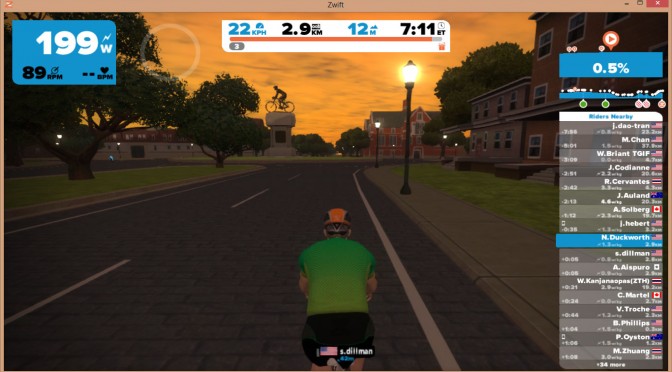
Zwift’s UCI World Championship Course, Richmond VA, 2015
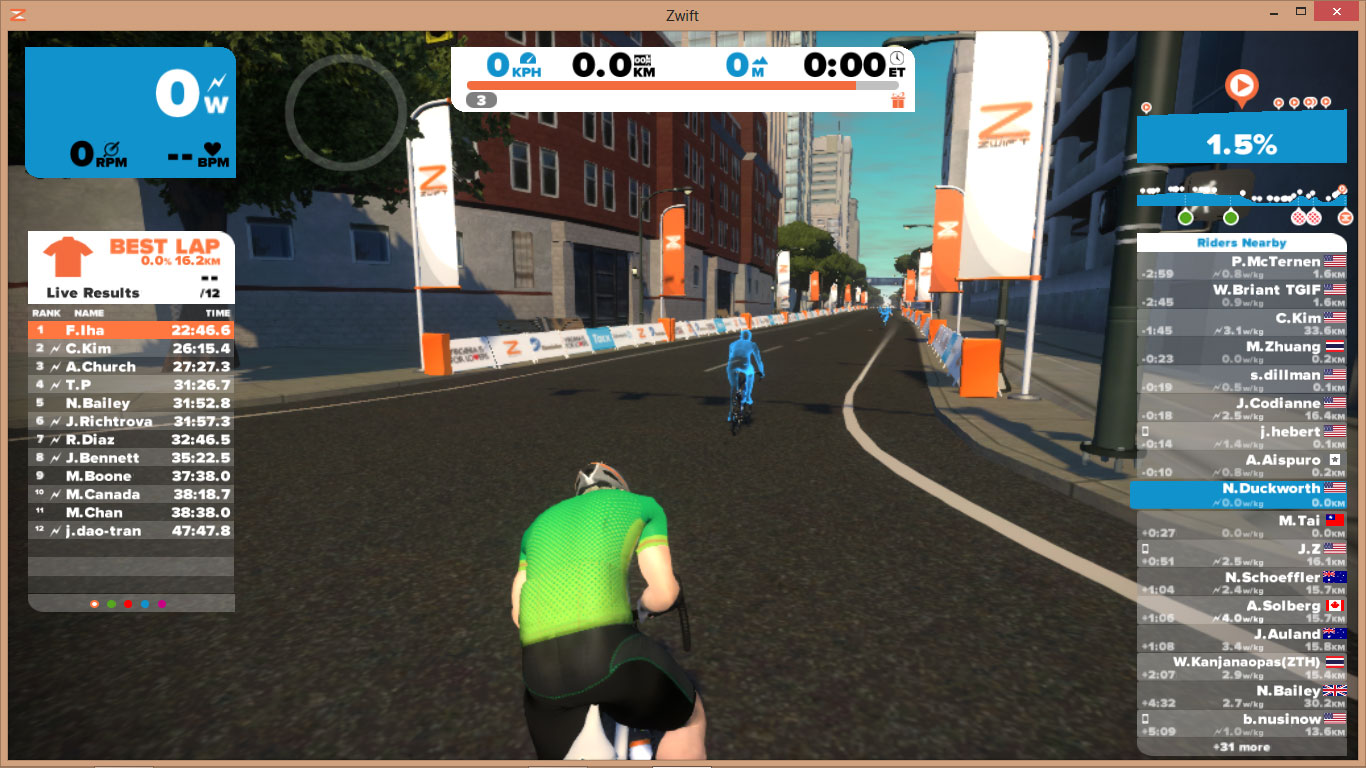
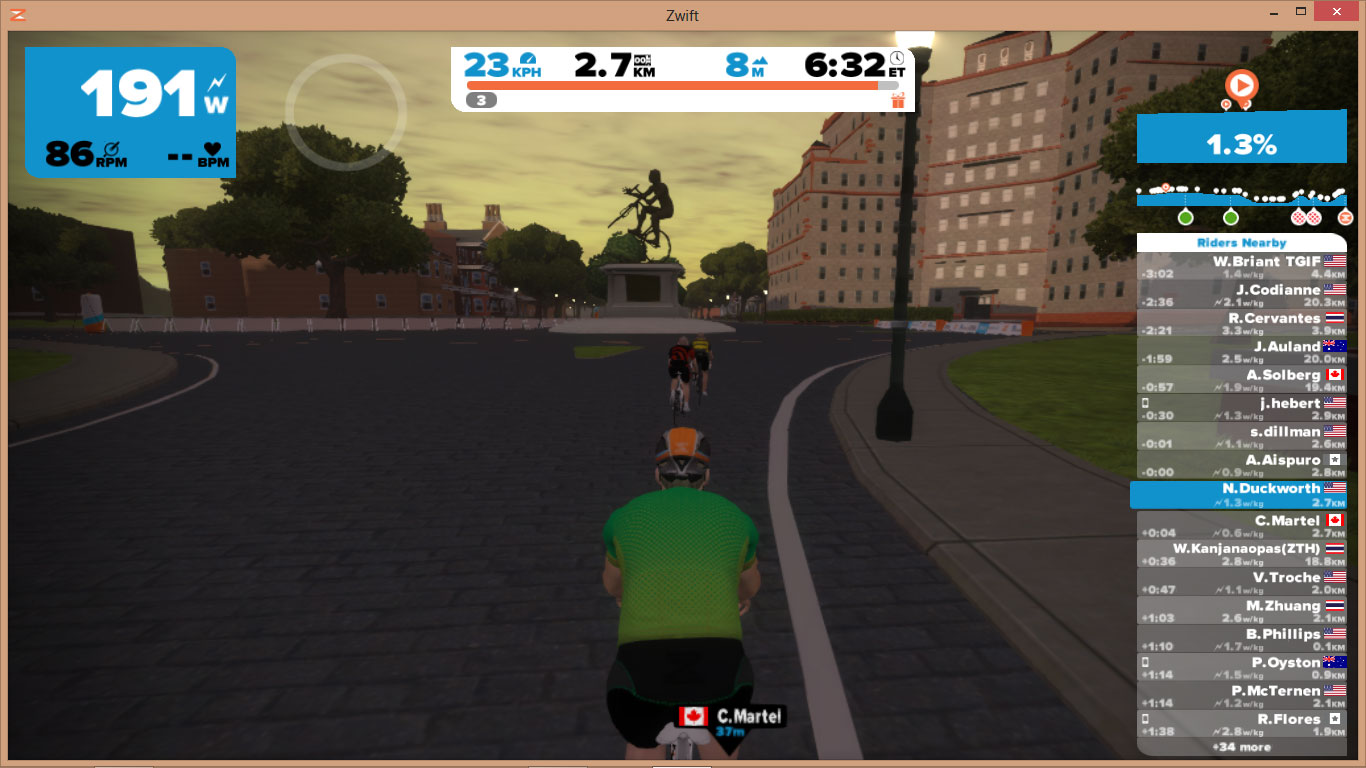
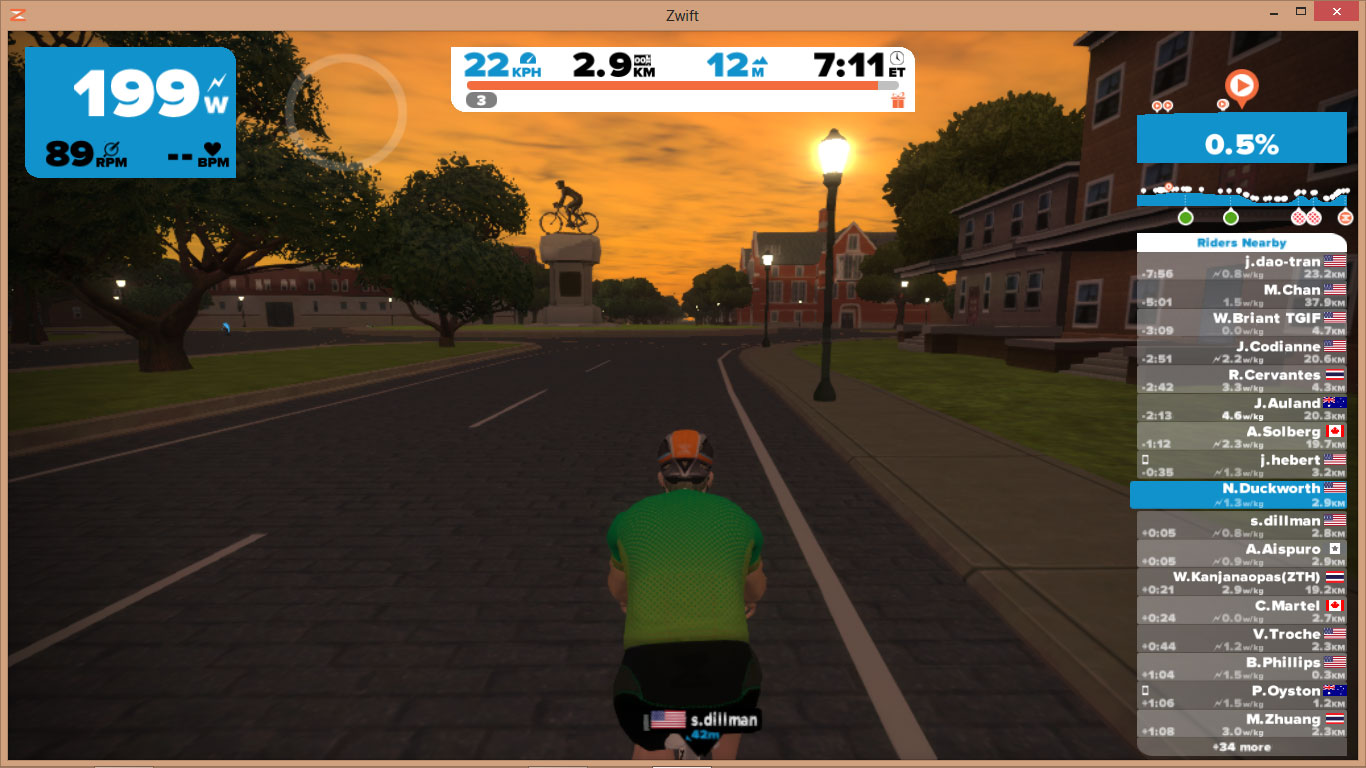
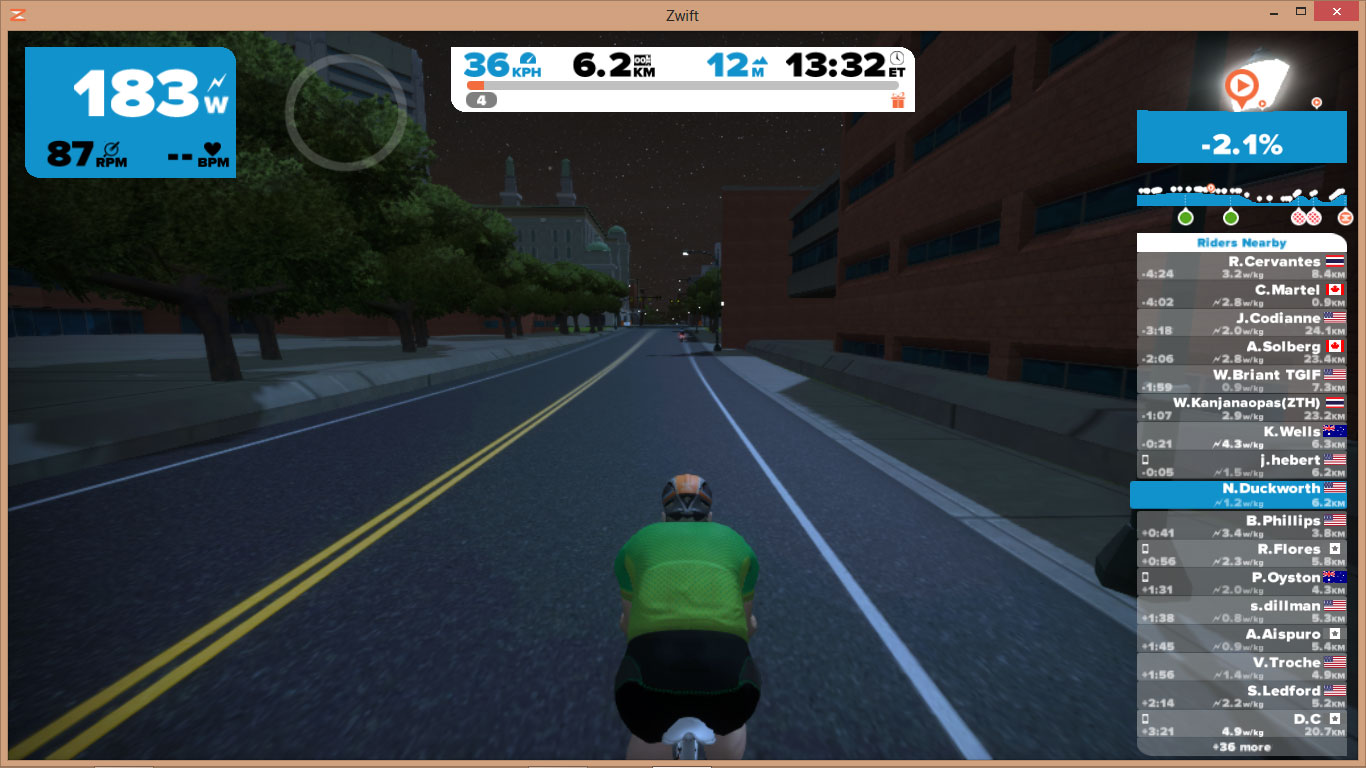
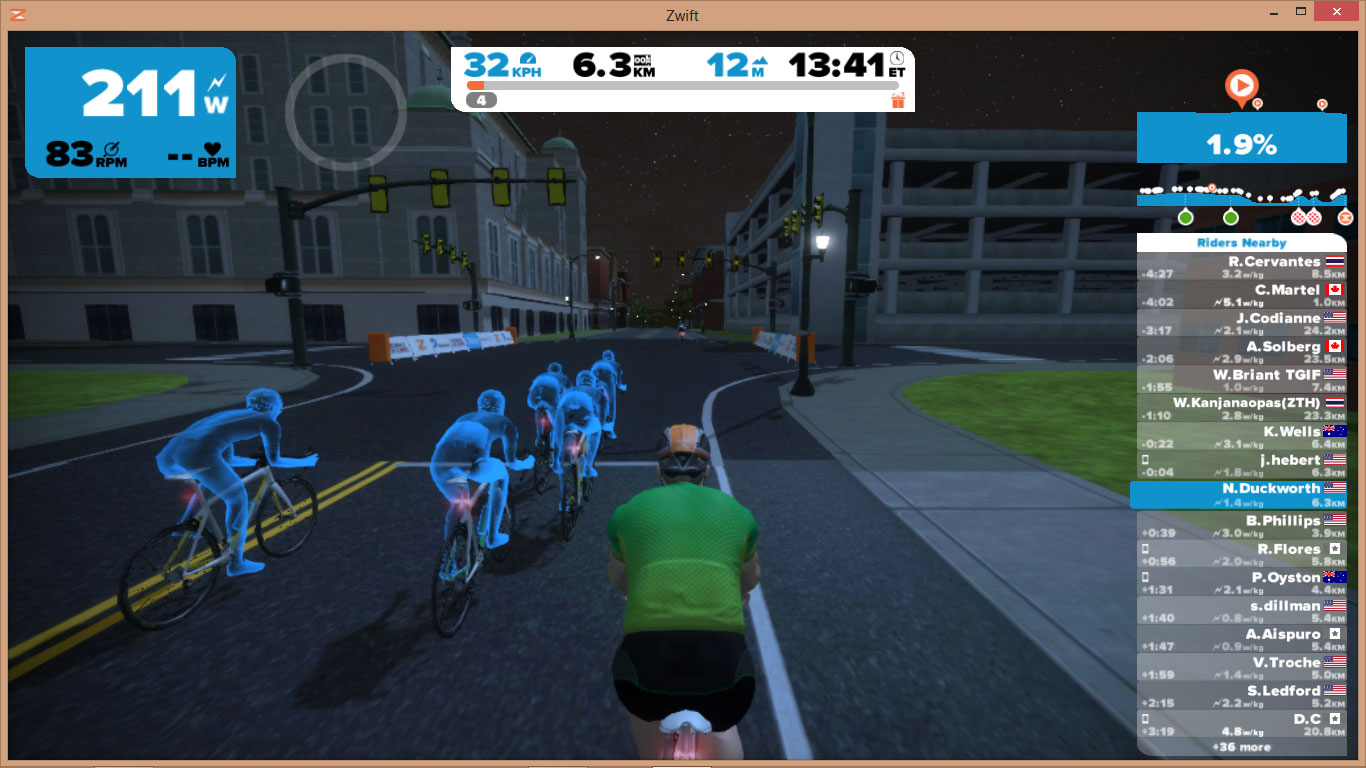
I took an early evening spin on the trainer last night. Good to see Zwift, the indoor cycling software, is expanding their course selection beyond the fantasy island, and going real world. Here’s some screenshots from the Zwift Cycling World Championship Course in Richmond VA.
A Vet and His Pet
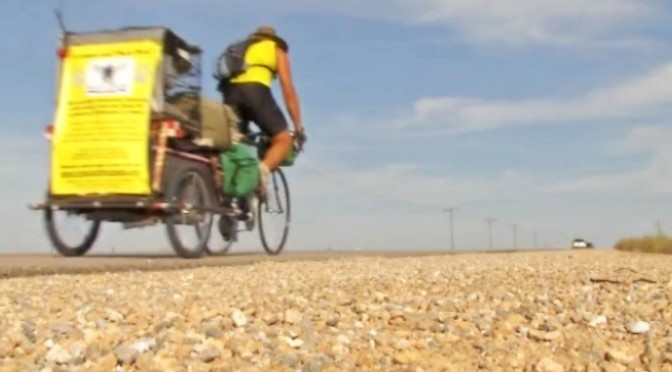
Gulf War veteran cycles across America with his dog
Harold Palmquist is a Gulf War veteran. When he lost his job as a truck driver, he lost his home and was out on the street with his beloved 9 year old dog Daisy. Homeless shelters would take in Harold, but not Daisy, and he wasn’t about to abandon Daisy.
Finally he chanced across a shelter that would accept pets, the Phoenix shelter “Veterans and Their Pets,” which also offers food and veterinary care for pets.
Now Palmquist is raising money for the shelter, and awareness for the plight of many veterans, by riding his bicycle across America.
If you’d like to help Harold and Daisy in their goal, you can donate via their Go Fund Me page.
The Improbable Threat of Mechanical Doping in Cycling
I think so-called “mechanical doping” is very different to traditional chemical doping. And the difference is such that it makes mechanical doping far less likely than normal doping.
Traditional Doping: It’s All About the Rider
Doping actually changes a rider’s physiology and transforms him into a stronger and faster rider. He can get on any bike and take on anyone and kick ass. His human performance is elevated, even if it is ultimately thanks to some alien substances in his body.
It’s virtually indistinguishable from the rider being naturally strong and a highly trained elite athlete.
Mechanical Doping: It’s All About the Bike
Mechanical doping transforms the bike. It does nothing for the rider, and with the right mechanics he could even be a complete wimp. He just needs to know where the switch is turn.
So while these forms of doping are both cheating, there’s a big philosophical and psychological difference.
There’s some degree of honor and in the rider being stronger, there’s none what so ever in your bike having a motor.
Mechanical doping is just flat out cheating with no upside for the rider apart from a stolen win. I can see an elite athlete being tempted to dope, I can’t see such an athlete sticking a motor on his bike.
There’s also the problem of conspiracy. A doper can dope privately and independently of the team. That’s highly unlikely in the case of mechanical doping, the mechanics at the least would have to be in on it.
And what if you have a mechanical for real and the team car can’t get to you in time? Your bike is going to be suspiciously heavy to anyone that touches it.
Recent Mechanical Doping Conspiracy Theories
There’s been a few, of course Cancellara’s Roubaix win was a big one, but there have been many more… Google “mechanical doping”.
At the time of this writing, “mechanical doping” conspiracy theories erupted after a Movistar mechanic “hides” broken bike in team car…
These fans must be bored and a little dense. There’s a simple and obvious answer. Sigh.
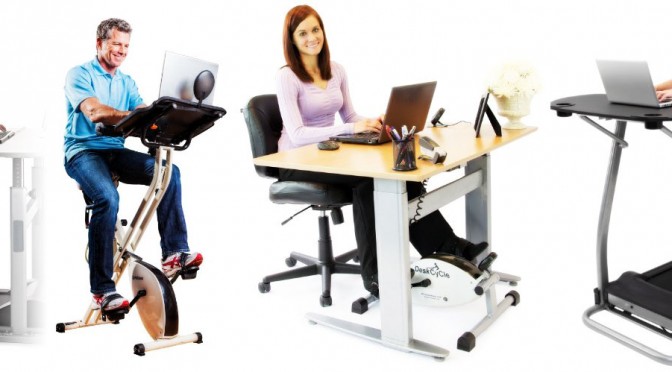
You Do It Every Day and It’s Killing You
New research shows that sitting at work is killing you. Get active while working and improve your creativity, productivity and health.
Recent and thorough research done in Australia in 2013 has reinforced earlier research… and it is very bad news for most of us.
If you sit for more than 4 hours a day, you’re at a much higher risk for chronic disease and death.
And what’s scary about it is that it doesn’t matter how much you exercise outside of those 4, 6, 8 hours of sitting.
“This is the one piece of bad news you shouldn’t sit down for: Sitting for hours on end, every day, is bad for your health. Sitting at work is bad for you. Sitting after work is bad for you. Sitting is the new smoking, except that the furniture lobby probably isn’t as powerful as the tobacco one.”
Seven Ways Sitting Will Kill You
http://www.popsci.com/science/article/2013-02/many-reasons-chair-killing-you?image=0
Self-Defense Against Sitting
What can you do about it? Quite a lot actually… The good news is there’s many options available today that enable you to stay active while working.
Not only will you be healthier, but active workers are more creative, more productive, and just pain awesome.
Your Self-Defense Against Sitting – the best standing, walking and cycling desks:
What the Fixie?! Now That’s Old School…
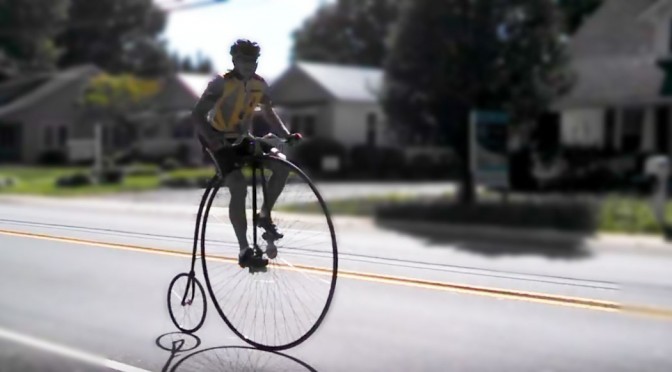
It’s Labor Day and we’re heading to lunch and I see something that makes me slam on the brakes and do a u-turn.
Rolling down the road in the opposite direction is a guy on a Penny-Farthing. He’s going at a decent speed. I catch him but he pulls over, dismounts and remounts heading the other way. Another u-turn and I’m back on his tail.
I pass him pull over well ahead of him and shot this short video of him coming by.
About the Penny-farthing
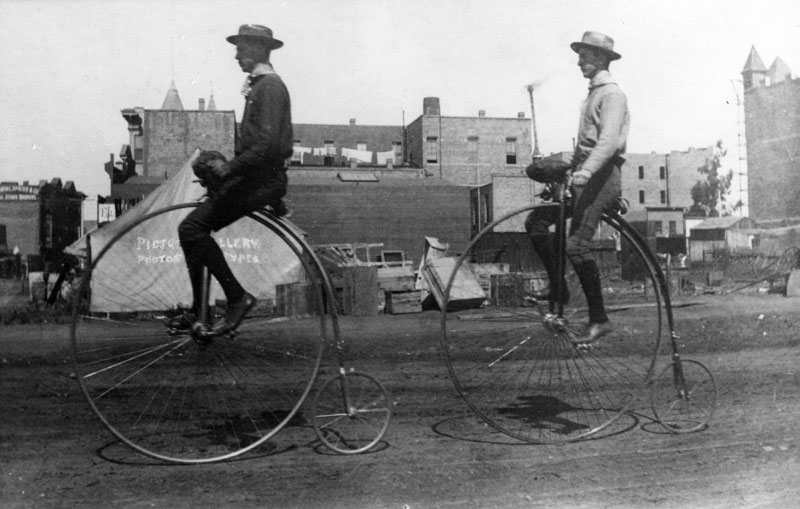 French mechanic Eugène Meyer invented the wire tension spoke wheel in 1868, and paved the way and popularized the penny-farthing that later developed.
In the US the high wheeler’s heyday was around 1878 to the end of the 19th century.
According to Wikipedia:
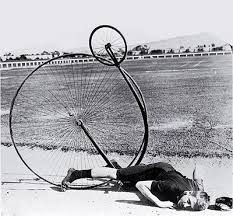
An attribute of the penny-farthing is that the rider sits high and nearly over the front axle. When the wheel strikes rocks and ruts, or under hard braking, the rider can be pitched forward off the bicycle head-first. Headers were relatively common and a significant, sometimes fatal, hazard.
Source: Wikipedia “Penny-Farthing”
Due to the danger of “headers,” the safety bicycle was developed, where the rider was not in such a precarious position.
The well-known dangers of the penny-farthing were, for the time of its prominence, outweighed by its strengths. While it was a difficult, dangerous machine, it was simpler, lighter, and faster than the safer velocipedes of the time. Two new developments changed this situation, and led to the rise of the safety bicycle. The first was the chain drive, originally used on tricycles, allowing a gear ratio to be chosen independent of the wheel size. The second was the pneumatic bicycle tire, allowing smaller wheels to provide a smooth ride.
Source: Wikipedia “Penny-Farthing”
How to Ride a High Wheeler
Mounting and dismounting a penny-farthing (also known as a high wheeler) can be tricky. Basically you need to put one foot on the rear step, scoot the bike along until you get it up to a stable speed, then mount the saddle and keep pedaling.
Hiwheel.com gives you the lowdown…
Get Your Own Penny-farthing
If you want your own, you can buy an antique replica high wheeler starting at about $1000 and going up to $3000. Hiwheel.com has a range of meticulously constructed replicas. But please, try keep your face off the road.