

Incredible bike handling skills on display from Martyn Ashton, Danny MacAskill and Chris Akrigg. There are 3 Road Bike Party videos, but the second one is a perennial favorite.
The Samurai Bicycle
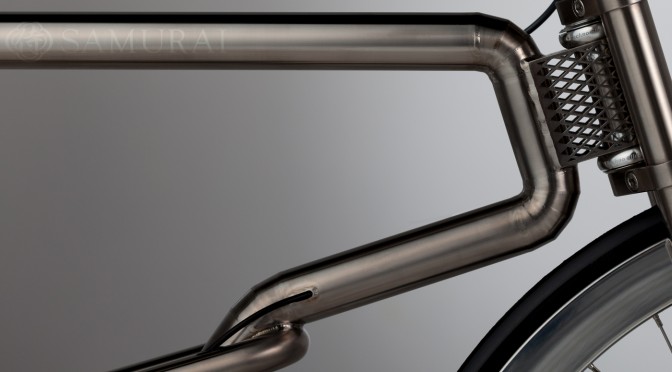
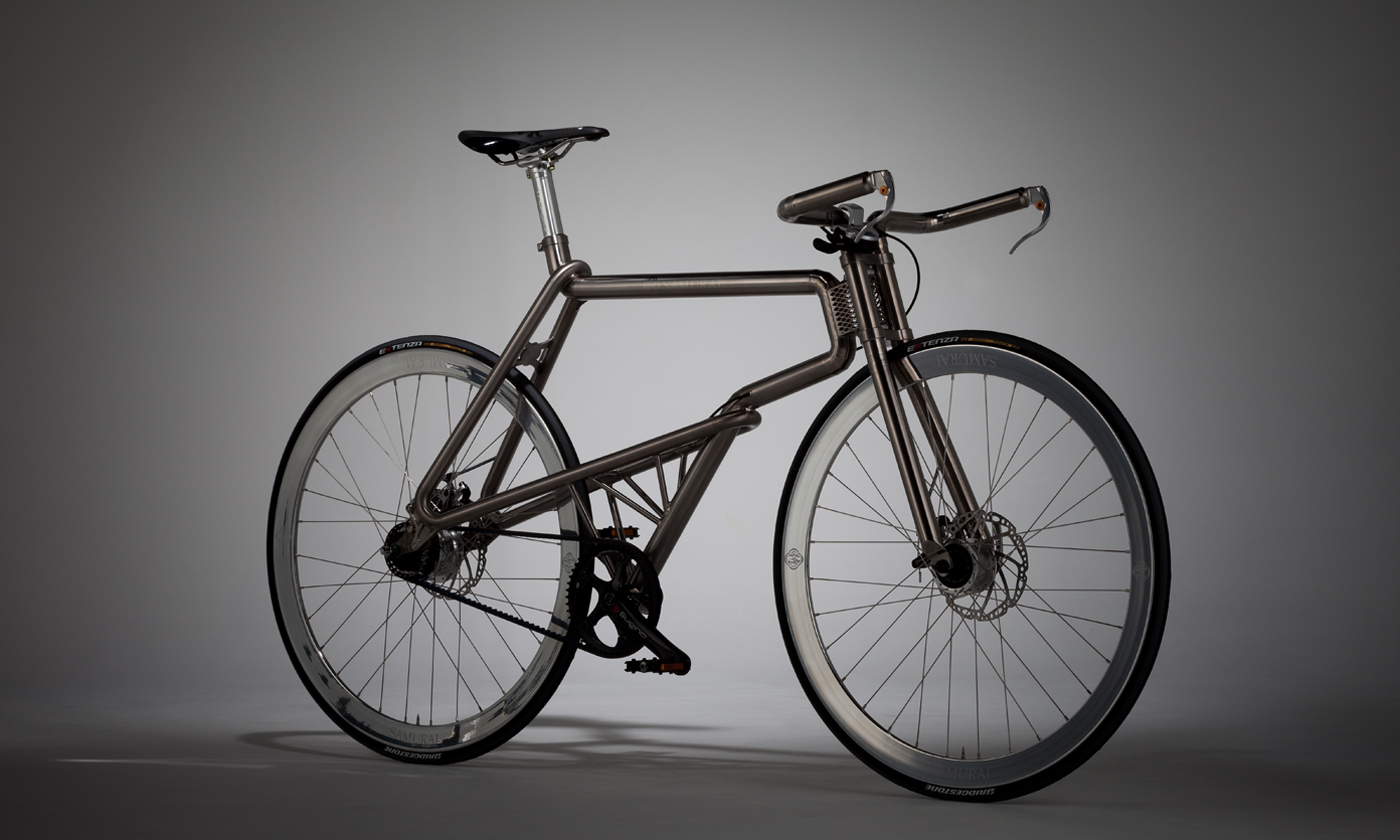
If Samurai designed a bicycle, it might look something like this:
Well that’s the story anyway.
 The frame is made from titanium (a number of varieties) and features Ebikan welding, a technique where, instead of bending the tubes, small fan-shaped pieces are welded together, giving a slightly ribbed or corrugated look to the curves.
There are other distinctive features of this bike…
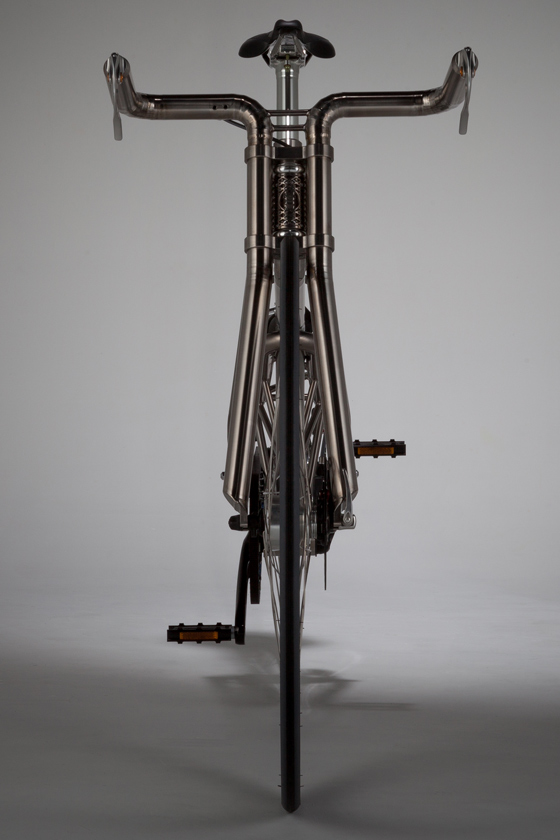
The chainstays are not horizontal, but rise up dramatically, to loop around and cradle the down tube. The down tube threads through the chainstay loop and then arcs down to meet the bottom bracket.
There is no seat tube. Intricate lattice design work joins the top tube to the head tube. The Samurai also features a belt drive, a rear disc brake, and internal cable routing.
Learn more about the Samurai Bicycle:
Fit for Samurais
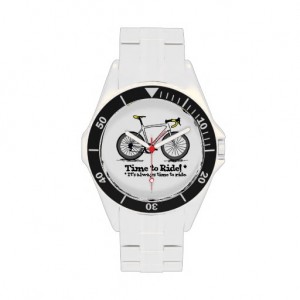 Made by Samurais from the melted metal of the swords of their vanquished enemies, the Velo Logic stainless steel time piece that sure to send waves of envy over your friends.
Velo Logic Stainless Steel Precision Watch
Okay, our watch is not really made from melted swords, but it is worthy of a Samurai. In fact Denny Giacobe gushed, “The watch itself is absolutely beautiful made of stainless steel. A true men’s sport watch. I hate to say this but I would have payed twice the price. Respectfully Denny G.” See for yourself, the Samurai-worthy watch.

iPhone Tough Case for Cyclists
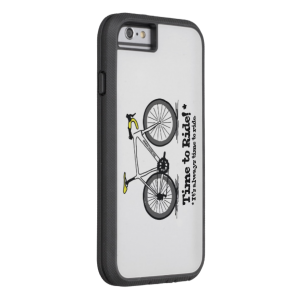 Now you can give your iPhone 6 the exact protection you need, with 3 models of iPhone 6 Cases for Cyclists. Travel with confidence and style, knowing your phone is protected no matter what the road or your day throws at you.
Not just an iPhone case…
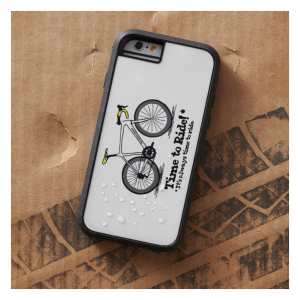 Each model is exclusively branded with the iconic, hand illustrated Velo Logic bicycle… you won’t find this anywhere else at any price.
What to expect…
Pull out your phone and you’re guaranteed a grin… no matter how rough your day has been, and remember a ride is the remedy for most ailments in life.
Be reminded every time you take out your phone, what’s really important in life.
Casually toss your phone on the table at your next coffee break during a ride, and watch your friends dive for it.
In fact, it is entirely possible that you will be made an offer you can’t refuse. It would be smart to invest in 2 or 3 cases, so when your friends offer to buy your iPhone cover there and then, you can pocket the cash knowing you’ve got another 1, 2 or 3 at home.
The Velo Logic iPhone Case 6 for Cyclists comes in 3 models
- Starting with the Tough Xtreme iPhone 6 Case for those times when you are out on the road, riding, hiking, it doesn’t matter, but that’s when anything can happen and usually does! Whether your phone is dropped on the road or rocks, pelted with rain or blasted by sand… that’s when your phone needs the best protection available, and the Tough Xtreme provides just that.
- On to the Tough iPhone 6 case when you’re out and about around town and need robust protection but don’t anticipate any crashes, tumbles down mountain sides, sandstorms or fights.. then this is what you need.
- And finally the ultra sleek Barely There model, when you want good protection without the bulk. Perfect for protecting your phone on date night, evening dinners or around the house.
See All 3 Models of the iPhone Case for Cyclists
Here’s the scoop on each of the models…
Case-Mate Tough Xtreme iPhone 6 Case for Cyclists
Merging military-grade protection with rugged style, this extra durable Case-Mate case is designed with three layers of toughness and a built in screen.
- Designed for the iPhone 6 with 4.7 inch screen
- Impact resistant PolyCore exterior with shock-absorbing DouFlex liner
- Built-in screen protector to prevent screen scratches and cracking
- Protective covering on all ports, controls & sensors
- Military-spec tested to protect against wind/rain, shock/drop, sand/dust, and vibration
- Textured exterior for added grip
- Custom printed with glossy finish
- Printed in the USA
See All 3 Models of the iPhone Case for Cyclists
Tough iPhone 6 Case for Cyclists
Contoured precisely to fit the iPhone 6 with 4.7 inch screen, this Case-Mate case features a hard shell plastic exterior and shock absorbing liner to protect your device.
- Designed for the iPhone 6 with 4.7 inch screen
- Shock absorbing flexible liner for an added layer of protection
- Impact resistant, durable hard plastic
- Lay-flat bezel to protect your screen from directly contacting surfaces
- Access to all ports, controls & sensors
- Customize with your images, designs, and text
- Glossy finish
- Printed in the USA
See All 3 Models of the iPhone Case for Cyclists
Case-Mate Barely There iPhone 6 Case
This form-fitting featherlight Case-Mate custom case provides full coverage to your iPhone 6 with 4.7 inch screen while still keeping your device ultra sleek and stylish.
- Designed for the iPhone 6 with 4.7 inch screen
- Slim profile and lightweight
- Impact resistant, durable hard plastic
- Lay-flat bezel to protect your screen from directly contacting surfaces
- Access to all ports, controls & sensors
- Customize with your images, designs, and text
- Glossy finish
- Printed in the USA
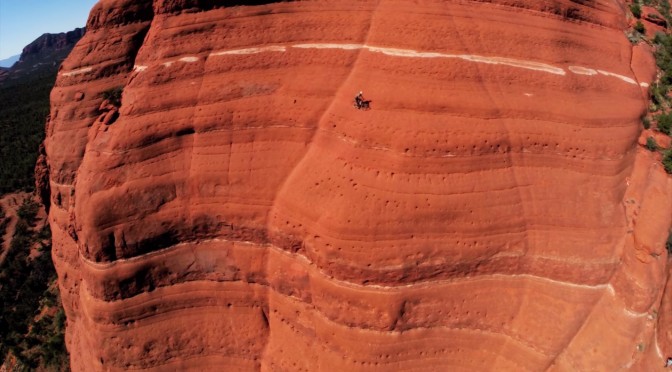
Daring or dumb… you decide
Not for the faint-hearted, those afraid of heights, vertigo suffers, or those who don’t check their brakes regularly…
Known as the “White Line,” this slick, sloping rock in Sedona, AZ is a test of nerves… or stupidity, depending on your point of view.
The rider is Michal Kollbek, drone camera pilot is Marshall Mullen.
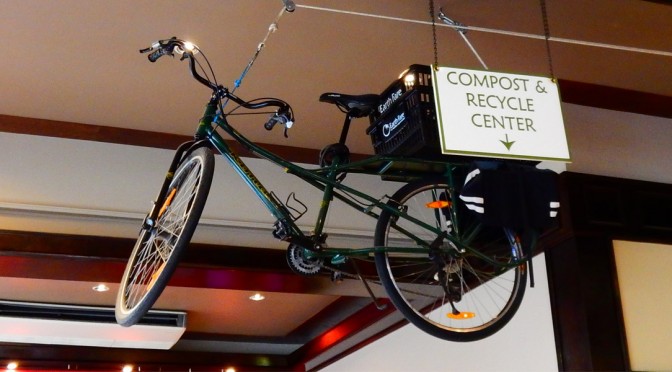
Bicycles of Asheville
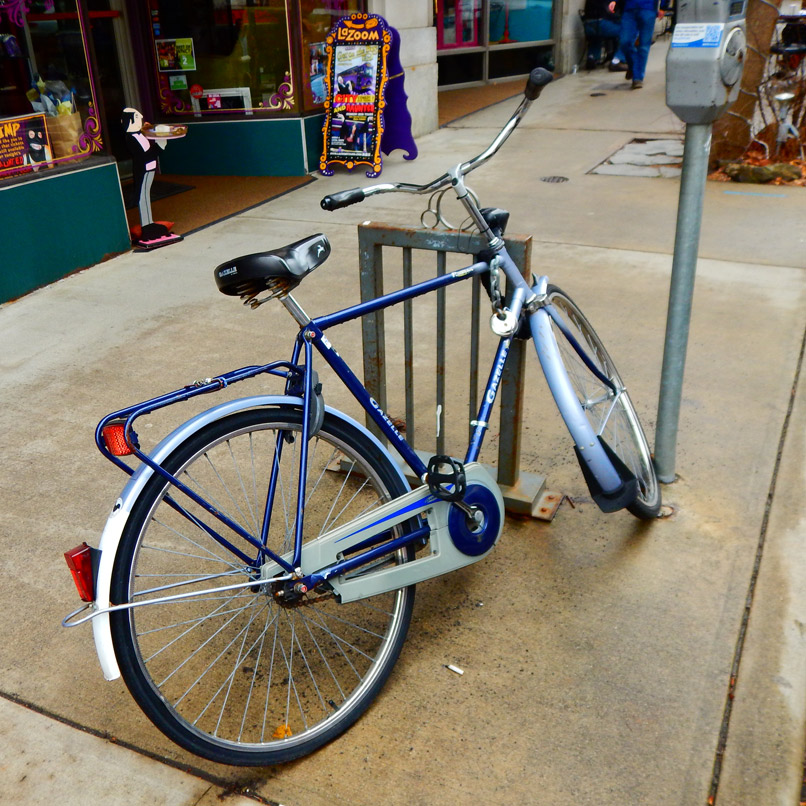
I had the pleasure of spending the weekend in Asheville NC this past weekend. While Asheville is not the bike-friendliest terrain, with plenty of steep hills, there’s lots of a bikes and cyclists, where ever you look.
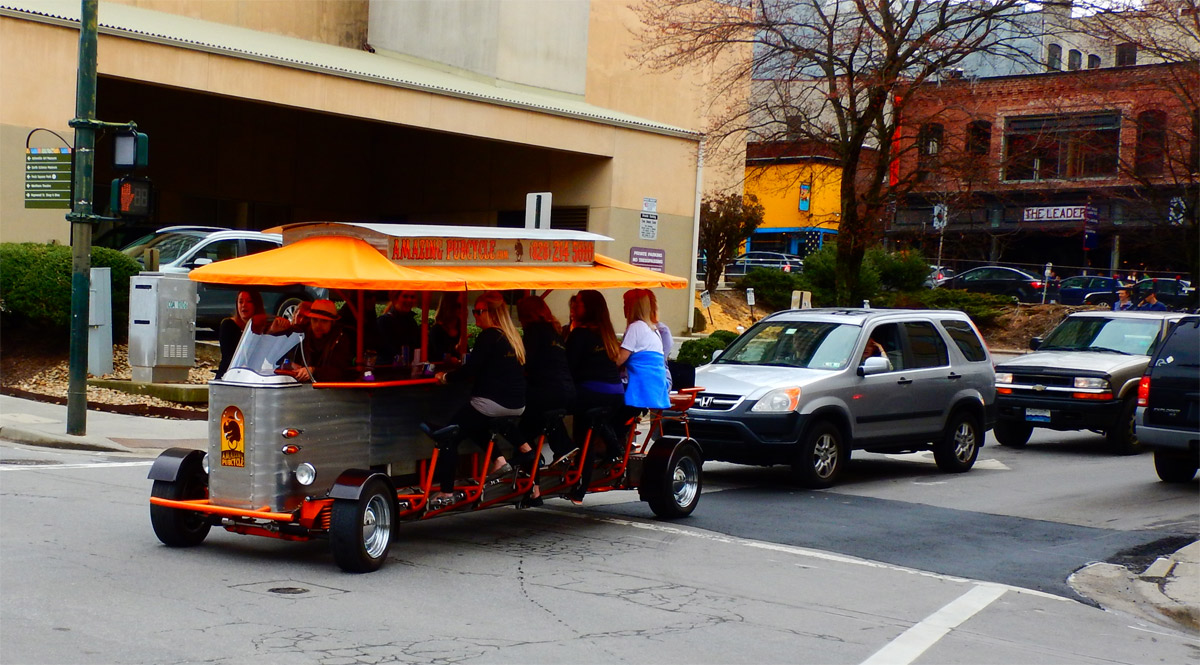
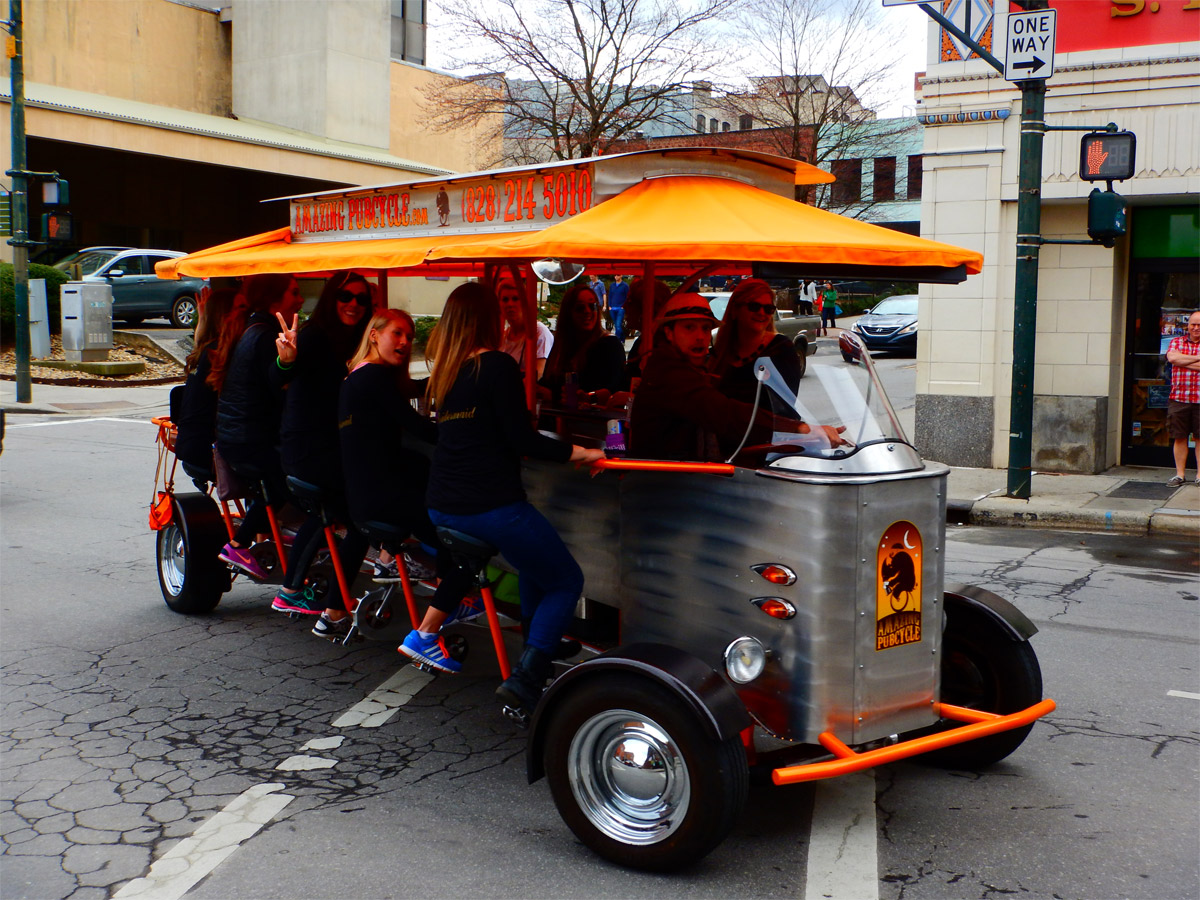
Many claim it is a myth, a figment of some drunken cyclist’s overactive imagination… but if you’re lucky, you might get a glimpse of “The Amazing Pubcycle.”
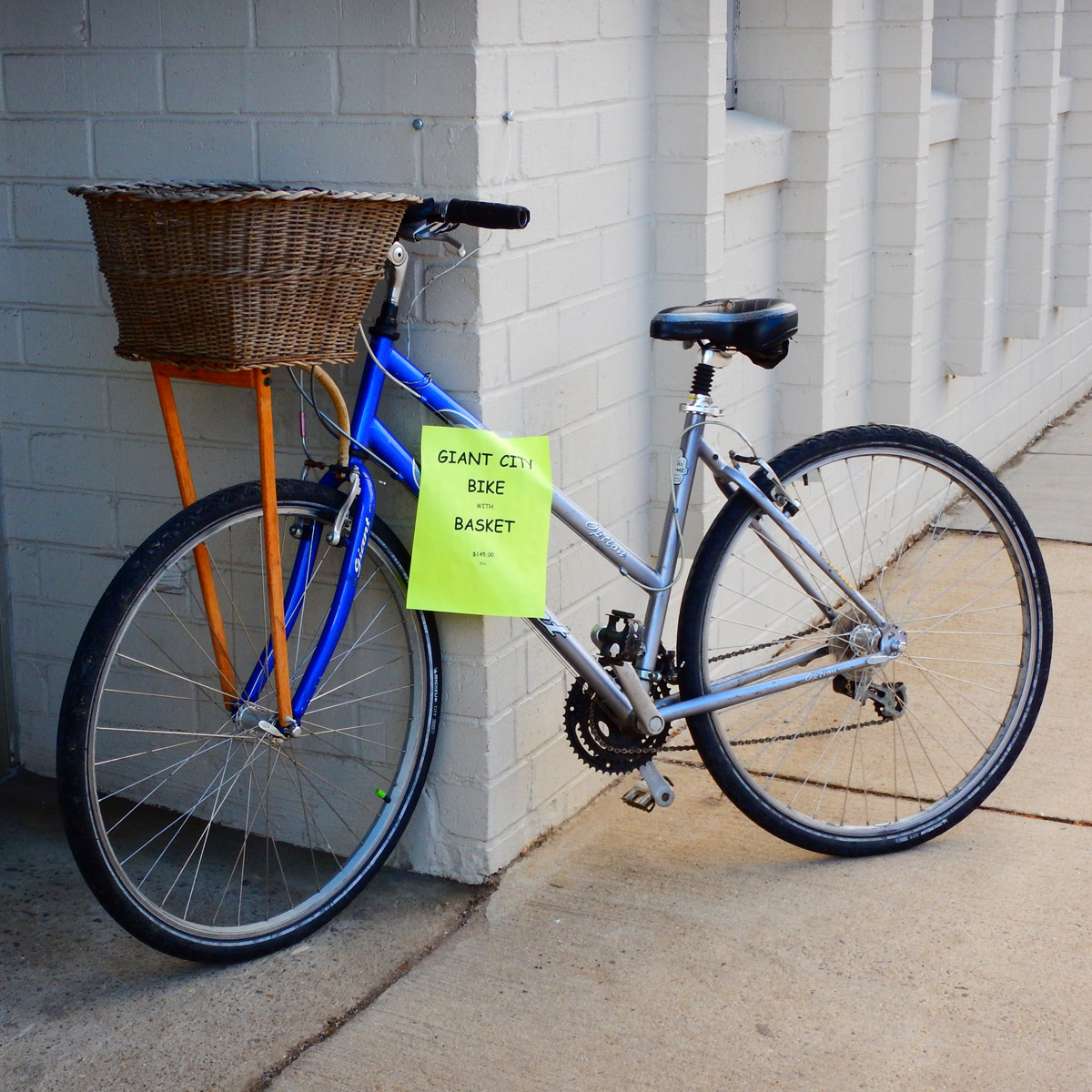
While there are quite a few serious cyclists in Asheville, this is a sampling of good old fashioned bikes… the kind you ride to get from A to B.
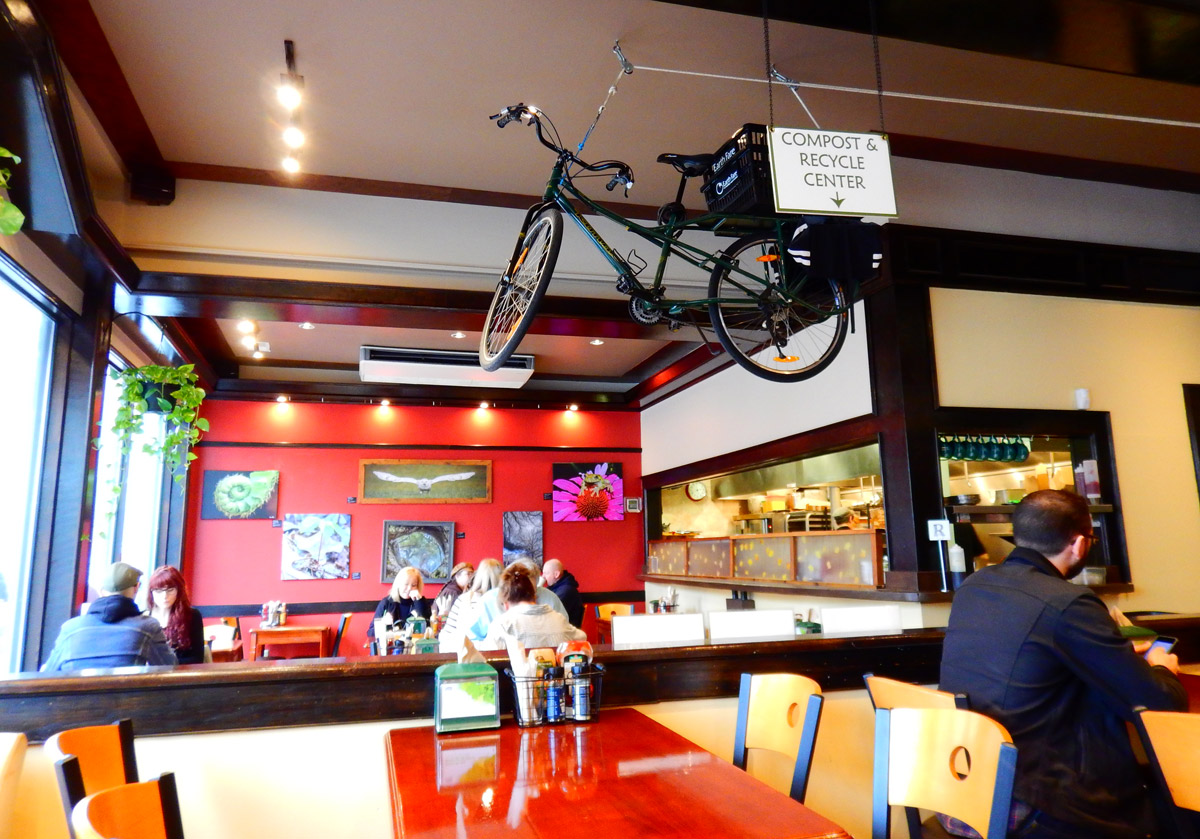
Bikes are everywhere, leaning against shop windows, in bike racks, tethered to trees and even dangling from the ceiling in a restaurant. Ashevillians do love their bikes.
Bicycles of Asheville North Carolina

Essential Know-How for Cyclists

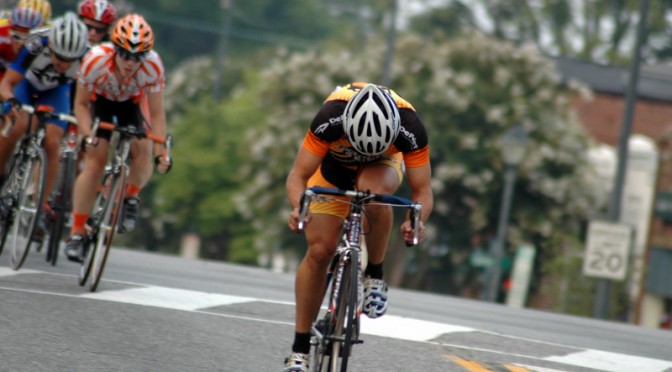
World cycling is broken — it’s time to lift the ban on doping
By Paul Dimeo, University of Stirling
Two years after Lance Armstrong’s doping admission made a mockery of professional cycling, not much has changed. That is the conclusion of the long-awaited report from the Cycling Independent Reform Commission (CIRC), which cost £2m to tell us what many already suspected.
Even the much-vaunted biological passport has not deterred the dopers. Introduced several years ago, it gives each athlete an individual electronic record of their blood and urine levels to make it easier for dope tests to spot deviations from the norm in each individual case. But the CIRC report found that cyclists simply take micro-doses to leave a minimal trace on the record.
So the current anti-doping system isn’t working, and by my rough calculations based on the income of the World Anti-Doping Agency and national equivalent organisations, it costs the world upwards of £50m a year across all sports. Continuing in this vein means throwing more money at something that seems impossible. So if our top-down, heavy-handed, science-driven anti-doping policy hasn’t worked, what are the alternatives?
Option 1: permit riders to dope
One obvious alternative is to abandon the pretence of clean sport altogether. This would arguably respect the traditions of the sport: back in the 1960s, for example, the world-leading French cyclist Jacques Anquetil favoured this kind of liberal approach. The five-time Tour de France winner (before dope tests were introduced) argued that cyclists should be allowed to make their own decisions about doping.

Wikimedia
Since then, large numbers of cyclists have actively pursued the latest drugs, seeing the authorities that try to stop them as the enemy. This cat-and-mouse game has proved expensive for sport in terms of both finance and credibility, and has led to situations of cyclists being unfairly and inconsistently punished.
While allowing doping would be controversial, there are comparisons. In boxing, for instance, modern-day participants know and accept the risk that they could incur brain injuries. In that sense, if all cyclists accepted the use of drugs in the sport then their decision would be a similar one based on the health risk that such drug use involves.
Option 2: doping under medical supervision
A second approach, in order to mitigate this health risk from doping, would be to allow it only under medical supervision. Several prominent academic health researchers have argued that the present risks would be substantially decreased if cyclists were able to access accurate information on the drugs.
As the CIRC report noted, cyclists often experiment with weight-loss supplements, painkillers and other drugs. It’s well known that turning to black-market supply chains and unethical doctors can increase risks. We also know from the CIRC that doping appears to be spreading into amateur cycling. So rather than spending money on propping up a broken system, why not use it to make medical advice freely available for all cyclists? To help combat the amateur problem, this could be part of a broader public-health strategy.
Like over-the-counter medicines, the approach to doping in cycling would be to assume that individuals could make informed, mature decisions regarding their own health. There is nothing to suggest that cyclists really want to kill themselves for the sake of their career.
Option 3: decriminalisation
What does anti-doping set out to achieve? The argument that anti-doping protects a level playing field or the sport’s image are spurious, as doping is only one small factor that can influence success in sport. There is no level playing field, and the image of sport is constantly undermined by the behaviour of athletes on and off the field. For me, the best argument for regulation is that it helps to protect the health of the athlete.
Without asking the public to become more tolerant of drugs in sport as per option two, instead a compromise might be to move to a lighter-touch process of self-reporting, medical monitoring, and perhaps even a form of doping quality control imposed by team managers.
Cyclists would need to prove they are in reasonable health before they could compete, and would be required to provide information to show they were monitoring their drug use as part of that. But there would be no obligation on the doctors to report such drug use to the authorities, and testing would be reduced and focused on health factors. The system would prioritise risk reduction and support for individual cyclists. This is the option that looks comparatively the most reasonable to me.

Julien Behal
Option 4: involve the athletes
Even though it might be easier to get the public to accept a decriminalised system, popular (and political) revulsion at the very notion of such liberalisation would still be the greatest hurdle to overcome. So we would need to shift attitudes too.
We should ask professional and amateur cyclists alike about what they would like their sport to do about doping. Remarkably, no one has done this before. After consultation, cyclists may come to feel responsible for the policies they have helped to create.
If they favoured a system closer to the status quo than options one to three, this may lead to some significant self-policing within the sport, and more social stigma around stepping out of line – if cyclists come to believe they are betraying others, they may think twice.
Of course, we can’t know in advance whether the athlete’s majority view would be deemed acceptable by the sport’s governing bodies, sponsors or the watching public. All the same, it would be a genuine leap of human faith to include the subjects of these policies in the policy-making process.
Wherever world cycling goes after the CIRC report, we all need to recognise that the future of the sport might depend on the compromises involved. The starting point must be to accept that more of the same simply will not suffice.

This article was originally published on The Conversation.
Read the original article.

Will a Terrorist Be Honored at the Tour de France?
France and the West is under assault from terrorist groups around the world. Now one Tour de France team wants to honor a terrorist during the Tour.
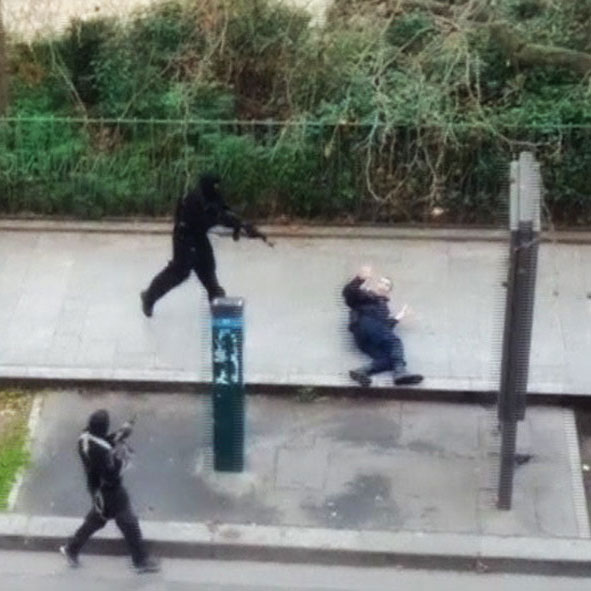 On January 7, 2015, France and the rest of the civilized world, was rocked by a barbaric act of terrorism in the epicenter of civilization, Paris, France. Two Islamist terrorists entered the offices of a weekly newspaper and slaughtered 11 people, and wounded another 11.
The carnage did not end there. In the days that followed there were further hostage takings, murders and injuries.
Exactly one week later, on January 14, the Tour de France organizers announced the teams in the 2015 Tour de France. Included in the roster is the first African-registered team, MTN-Qhubeka.
What has this got to do with the terrorist atrocities a week earlier?
The MTN-Qhubeka team is planning on turning July 18 in to a day of celebration of a political icon. That’s bad enough, but the political icon they’d like to honor was not just any political icon, he was an advocate of terrorism.
The team, along with the Mandela Foundation, would like to celebrate Nelson Mandela.
What most people do not know is that Nelson Mandela’s ANC group was a terrorist organization. The ANC’s goal was to impose Soviet-style communism on South Africa.
In 1961 Mandela co-founded the so-called “military” wing of the ANC, Umkhonto we Sizwe (“Spear of the Nation”).
In 1964, Mandela was convicted on 193 counts of sabotage and smuggling of munitions, including 210,000 soviet hand grenades and other bomb-making materials.
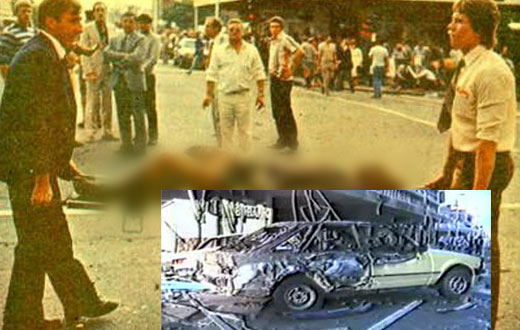
A huge pall of smoke rose hundreds of feet into the air as debris and bodies were strewn around the scene of the explosion… It exploded at the height of the city’s rush-hour as hundreds of people were leaving work for the weekend. Glass and metal were catapulted into the air as shop-fronts and windows were blown out. Many passers-by had limbs amputated by the flying debris. Others bled to death. BBC, May 20, 1983
The ANC and Mandela’s “Spear of the Nation” went on to assassinate political enemies, bomb banks, shopping centers, restaurants, and indiscriminately slaughter blacks, whites, men, women and children.
All in all the Global Terrorism Database lists 606 acts of terrorism committed by the ANC.
This wasn’t limited to attacks against military, police and government targets, or even whites. The ANC used violence and terror extensively among the black population to command obedience and loyalty to the ANC, and to exterminate and instill fear in their political opponents.
As despicable as the apartheid regime was, Mandela was not in prison for his ideas or opposition to apartheid, it was because of his acts of violence and advocacy of terrorism. (Many people were opposed to apartheid and were not in prison.)
In fact, in 1985 then Prime Minister P.W. Botha offered Mandela his freedom in exchange for simply renouncing violence. He refused.
In 1986, as if to reaffirm the ANC’s commitment to terrorism, Nelson Mandela’s wife, Winnie Mandela, said, “With our boxes of matches and necklaces we’ll liberate this country.”
She was endorsing the horrific practice of “necklacing,” putting a tire doused in gasoline over someone’s neck, and setting them on fire.
The victim suffered a slow and agonizing death. Eyewitnesses report that it could take up to 20 minutes for the victim to die. Over a thousand people are estimated to have been tortured and killed by necklacing.
In order to defeat the bloody scourge of terrorism, we have to tackle it head on philosophically and militarily. We have to clearly identify it, condemn it, and deprive it of every shred of respectability.
There can be no ambiguity, no appeasement, and certainly no honoring of its advocates and perpetrators.
At a critical time when the West is under a bloody and barbaric assault from Islamic terrorists, at a time when the Parisian atrocity is fresh in our minds; how appropriate is it to turn the Tour de France into a vehicle for celebrating a man who had more in common with those who perpetrated the Paris massacre than with its victims?
References and Resources
- The African National Congress (ANC):
http://www.anc.org.za/ - Global Terrorist Database (University of Maryland) listing of ANC terrorist activities:
http://apps.start.umd.edu/gtd/search/Results.aspx?page=1&casualties_type=b&casualties_max=&dtp2=all&perpetrator=281&count=100&charttype=line&chart=overtime&ob=GTDID&od=desc&expanded=yes#results-table - Umkhonto we Sizwe Operations, Nelson Mandela Foundation :
https://www.nelsonmandela.org/omalley/index.php/site/q/03lv02424/04lv02730/05lv02918/06lv02949.htm - BBC: Car Bomb in South Africa Kills 16:
http://news.bbc.co.uk/onthisday/hi/dates/stories/may/20/newsid_4326000/4326975.stm - Untangling South Africa, The Intellectual Activist, Volume IV, Number 4
- South Africa’s War on Capitalism, Walter E. Williams, 1989, Praeger Publishers
- Winning the Unwinnable War, Ed. Elan Journo, 2009, Ayn Rand Institute

Cycling Tshirt from Velo Logic
Keep your velo love close to your heart, now available the Velo Logic performance long sleeve tshirt.
 I’m a bit of a tee shirt aficionado. It needs to be a unique design and well made. I hate the cheap stuff that’s scratchy, loses it’s shape, or falls apart after a couple of washes. I’ve had this Velo Logic Cycling Tshirt for a year, worn it and washed it a lot and it’s still going strong!
It’s soft, comfortable, light with a bit of stretch to give you the freedom to move as you choose. It has flat stitched raglan sleeves, so there’s no uncomfortable ridges or bumps against your skin.
It’s great as an undershirt or worn on its own (I do both), and with it’s moisture-wicking ability it is perfectly suited to active the lifestyle… but lounging around in it works too.
It’s ideal for chilly days, cool mornings and evenings. I often wear it under a short sleeve tee, or a long sleeve button up. As the day warms up, I cast off my outer layer.
Detailed specs below or check it out and more at the Velo Lust Store The Velo Logic Long Sleeve Tee from Sport-Tek
Stay cool and dry during your workout with the sweat-wicking performance long sleeve shirt from Sport-Tek. Made with raglan sleeves, this lightweight shirt has the look and fit for any athletic activity. It’s 95%/5% poly and spandex, so it’s made to last. You can customize it too, pick your size, fabric and color.
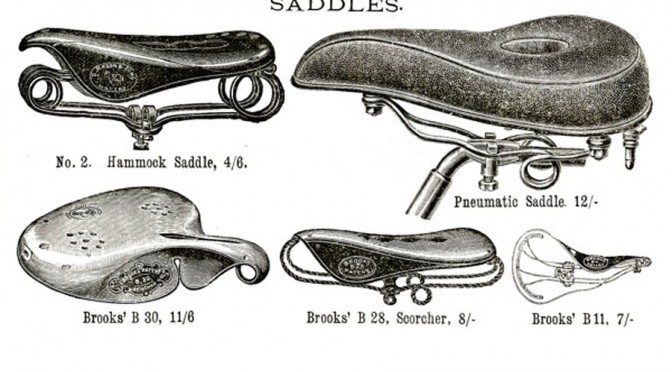
Ride Like It’s 1896: Cycling Tips from the Past
Cycling is one of the most healthful and invigorating kinds of exercise; as well for mind as body. But like other good things it may be abused, and the faults of its votaries are visited upon it.
Beginners on commencing to ride should act with moderation. A short time only each day with the machine at first, then gradually lengthening it in proportion as the ease grows with which they can manage it. It is never quite wise to start on a long ride without first having had a few preliminary shorter ones. With regular practice and care, there is practically no limit which the human frame may not train up to.”
This is taken from the Metropolitan Machinist’s Company brochure from 1896. It’s a treasure, giving an insight into the equipment and problems of cycling in the late 19th century.

Take a look at some of the saddles advertised, including Brooks saddles which is still going, and cutaway versions.

You could also pick up a bicycle bag, a variety of luggage carriers, lamps and rifle mounts for your handlebars. Apparently road rage is not a new phenomenon.

I leave you with these words of wisdom. (When I was starting out I certainly could have used the tram-lines advice.)
In Riding it is well to avoid gutters, ruts and tram-lines. Cross the latter as nearly at right angles as possible, slacken speed in turning a corner. Keep the machine upright; and work the pedals evenly.
And if you want something more up to date (picky, picky)… you can’t beat a good book or browse the store. And before you ask, we’re out of rifle mounts.
The “Sin” of Cycling
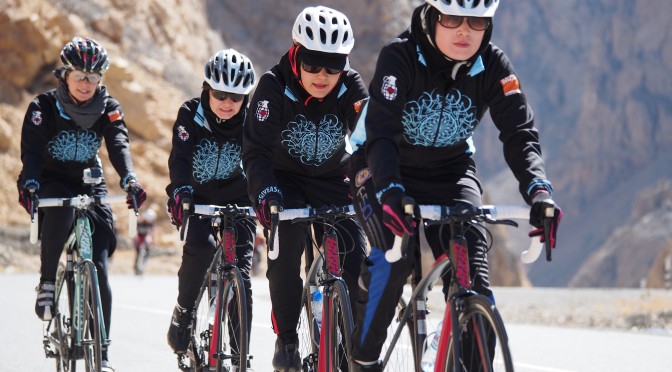
They ride against against the tide. They ride in spite of disapproving relatives. They must be escorted on training rides by their coach, Abdul Sadiq, who trains them despite the threats and the violence. Six months ago he was hospitalized after a threat turned into an attack. They ride before dawn to avoid insults and rocks.
They are women in Afghanistan, and their “sin” is cycling.
David Loyn (BBC News) calls them perhaps “the world’s most unlikely sports team.” And says they have an “evangelical zeal” … except is it for their cycling not their religion.
Even in post-Taliban Afghanistan, their lives are not their own. 18-year-old team member Zainab has a dream, she says:
“It’s my ambition, and I hope that one day girls will be allowed to go cycling on the streets, without a coach, or anyone with them, and they will not have problems.”
I say good for them. And damn their detractors.
Sources:
BBC News http://www.bbc.com/news/world-asia-31311887
The Guardian: http://www.theguardian.com/world/2014/oct/26/afghanistan-women-cycling-team-olympic-dream