
This is the new iPhone 7 Tough Case for Real Cyclists from Velo Logic, we like old school… tough case, rough beauty, hard truths, and the only iPhone case you’ll need.
Go get yours now:

This is the new iPhone 7 Tough Case for Real Cyclists from Velo Logic, we like old school… tough case, rough beauty, hard truths, and the only iPhone case you’ll need.
Go get yours now:
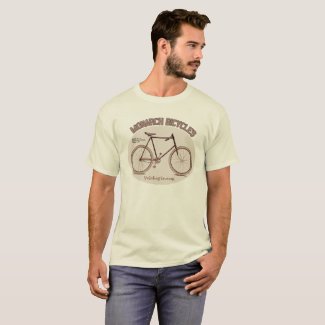
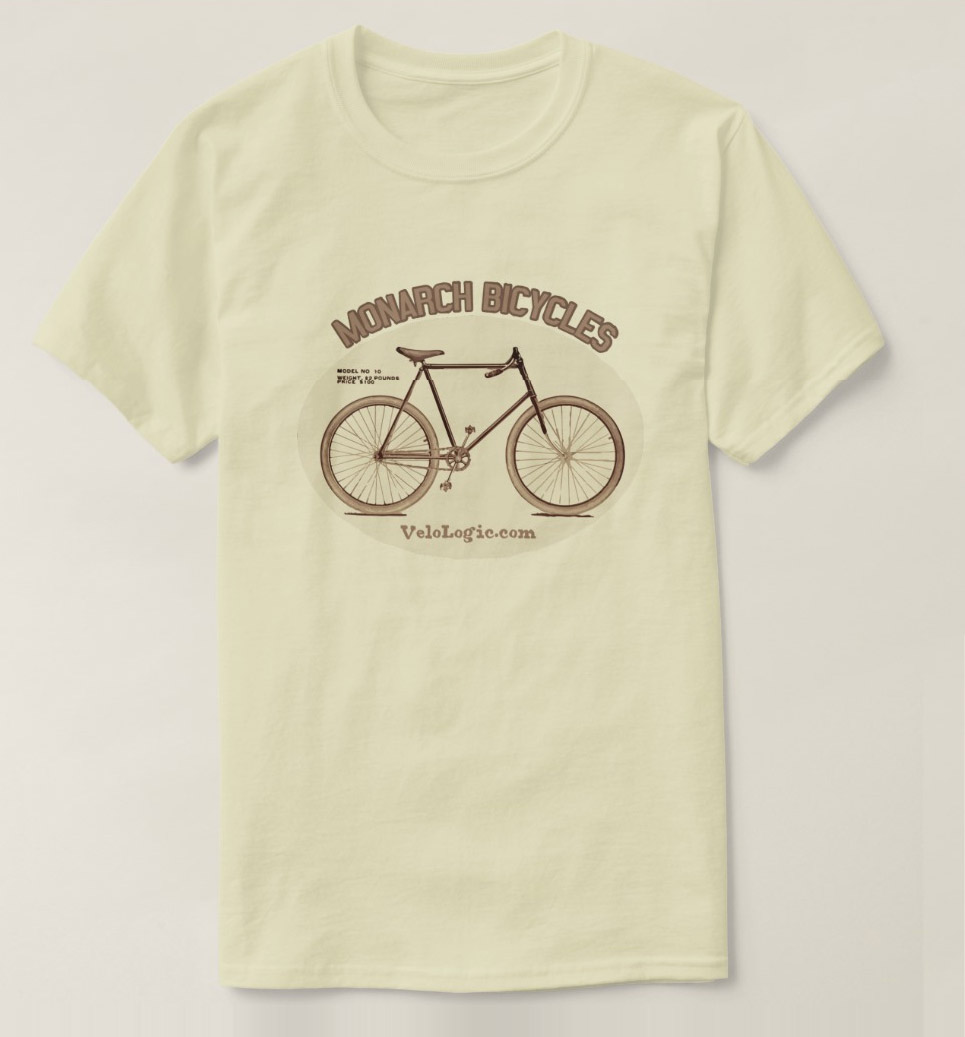
The Monarch Model No. 10 bicycle was a steel-framed beauty with wooden rims, weighing in at 22 lbs. It was built by the Monarch Cycle Manufacturing Company in late 19th century Chicago.
Here at Velo Logic we love vintage and natural, and the No. 10 was both: built in 1894 of all natural steel, wood, rubber, and leather.
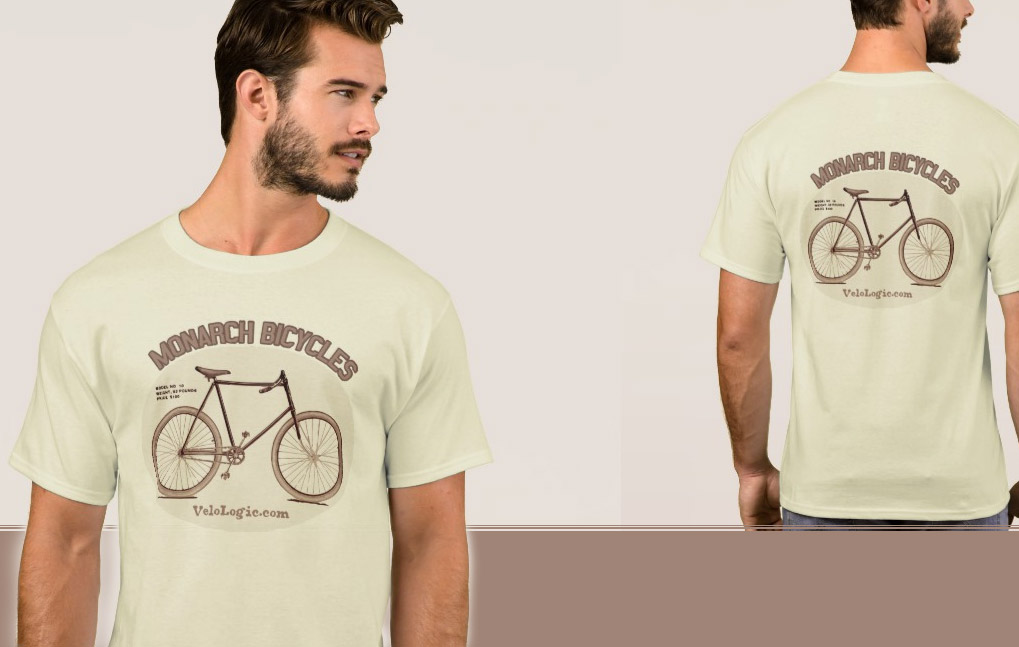
Velo Logic’s latest tee shirt design pays homage to this bicycle of a bygone era. The subtle earthy colors complement the natural cotton shirt. With the design on the front and the back, you get double the cool.
Get your summer kick back gear here:
https://www.zazzle.com/z/y8a7l?rf=238429190391645040
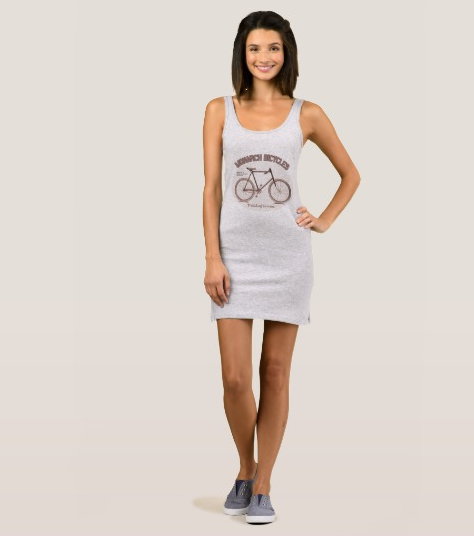
Why should guys have all the fun? Velo Logic’s designs look even better on ladies apparel. Check out the ladies jersey tank dress with “Monarch”.
Monarch Cycle Mfg rose to become a prominent bicycle maker in the late nineteenth century. Here’s a bit of their history…
In 1889 John William Kiser, resigned went to Chicago, Ill., and became a manager at the Chicago Sewing Machine Company.
Kiser was practically without funds when arriving in Chicago, but with the energy of a young farmer and the brains of a captain of industry, he took advantage of the opportunities that confronted him and through untiring efforts, within a few years, he had accumulated a large fortune.
Out of the sewing-machine company came the Monarch Cycle Manufacturing Company, which was organized by Mr. Kiser in 1892 with a capitalization of $500,000. He was the president and majority stockholder. He seized the wonderful opportunity offered by the bicycle and made this concern one of the strongest in the field.
In 1899 Mr. Kiser sold the Monarch Cycle Manufacturing Company to the “Bicycle Trust,” and in so doing displayed that fine judgment which has crowned all his business ventures with such phenomenal success, for very shortly the crash came. He saw that the automobile would soon succeed the bicycle in popular esteem and so conserved his resources at the outset.
Source: https://chicagology.com/cycling/monarch/
Kiser was obviously a smart man who anticipated the car and got out at just the right time. Of course, after the auto craze tapered off, bicycles did make a comeback, but not to the heights of their previous glory.
Let’s face it, drafting is fun. You can up your speed dramatically by catching a tow from a motorcycle, a car, a truck or bus. And the bigger it is the better. You get sucked along in the pocket of air that is dragged behind the vehicle.
Brazilian cyclist, Evan Portela, showed the pulling power of the draft when he videoed his ride behind a truck at 77 mph. Displaying dazzling confidence in his ability to keep up, and in perhaps his most daring move, he attached his GoPro to the truck.
Now obviously the usual disclaimers apply. This is extremely dangerous. Portela is riding feet, if not inches, behind a truck and he’s blind. Should the truck driver brake suddenly, or swerve to avoid a stationary vehicle or some debris in the road, this ride would end very badly. You could lose a lot more than your GoPro.
H/T Road.cc
by Peter Schurman
Peter Schurman shares his memories of racing track in San Jose, Encino, Portland, Northbrook, Kenosha, Detroit, Mexico City, Montreal, from 1973-1976.
A recent Velo Logic article reminds me of the the USA Six-Days. They were before my time, but there were tracks, indoors and outdoors, all over the country!
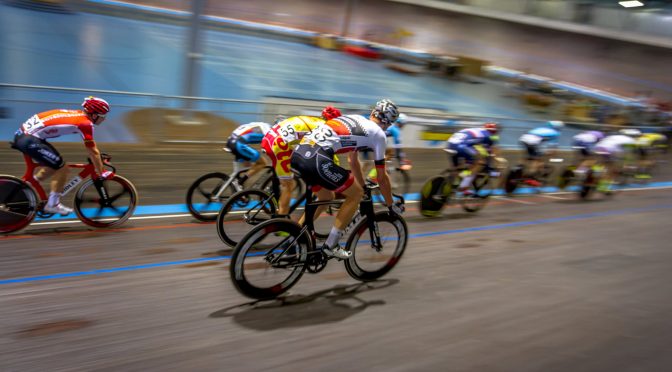
The style of racing is called Madison Racing: 2-man teams, one man racing, hell bent, along the pole line, the other racer riding up on the rail, catching his breath and gauging when to dive down the bank, getting slung by the team-mate into the race, sprinting for points!
It was carefully choreographed chaos and the craziest thing I ever did!
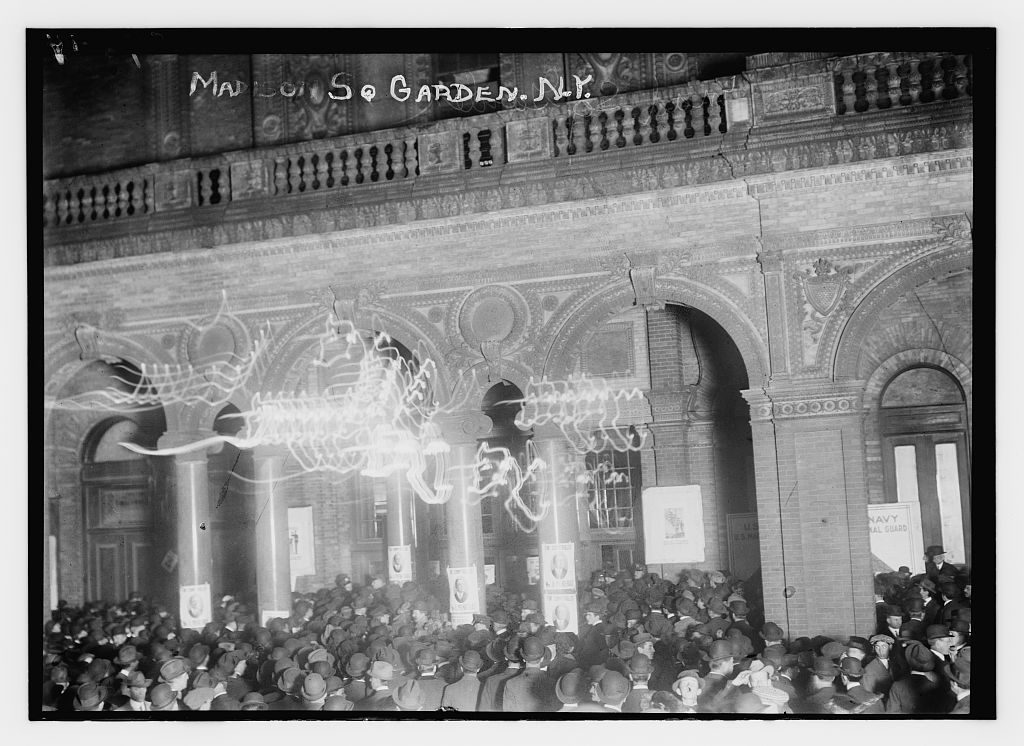
I have an old black & white photo from a Clement tire advertisement from the 30s or 40s, showing Madison Square Garden, packed to the rafters with people. The infield was jammed with people, wearing big, old topcoats and floppy fedoras!
The racers were just a blur on the banked oval.
I’ve heard it said that Madison Style racing was so popular, that a venue had to be built to hold the races… it was called Madison Square Garden.
But there was a growing problem: gambling. The odds were played and the payoffs were huge. Human nature prevailed, and some teams were “on the take”.
Doping was a problem then, too; not too surprising. Problems grew exponentially. It became a scandal and the powers that be squashed the Six Days.But Madison Style racing continued where ever there were velodromes.
The sanctioning body for bicycle racers and racing events became the Amateur Bicycle League. And they meant amateur. No cash money awarded, no professional affiliation.
In the early 1970’s, I was chasing my dream. I loved bicycle racing; I ate and slept bicycle racing.
I had always been a big guy, and I found my niche on the velodrome. My home track was in San Jose, and in those years, the legend Jack Disney was a fixture at the track.
In the late summer of 1974, Jack suggested I pair up with another rider, Larry Swantner. The way Jack saw it, we would make a great combo for Madison racing, a regular event which closed out the weekly races.
That year, at the National Track Championships at the Northbrook Velodrome, Larry had finished seventh in the Kilo, and I had finished seventh in the Pursuit.
Jack worked with us during the week, always pushing us faster and harder. And later that week at the Saturday meet, I can remember hearing Jack shouting “Don’t slow down!” as I was high on the bank, about to dive into the fray! I kept my speed and yes, Larry and I won that afternoon. I can also recall hearing the yelling and cheering from the crowd watching in the bleachers. It was the best!
As I recall, Larry and I each won a gift certificate from a local bike shop for $25.00. Amateurs don’t get prize money!
This is an interesting historical documentary on how a bicycle is made.
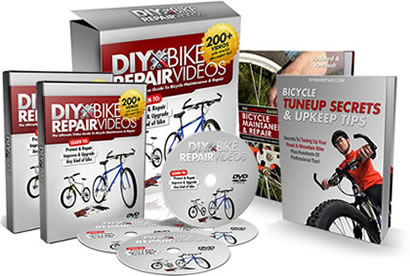
Whether you want to learn more about your bike, feel confident on the road, save money, or you're considering becoming a pro bike mechanic, this bicycle repair course has got you covered.
Taught by pro bike mechanics and packed with insider shortcuts and tips, it covers everything from minor repairs to the heavy stuff... and makes it easy to follow along, step-by-step, so you're never confused or wondering what to do next.
If you want to have an entire video encyclopedia of bicycle repairs at your fingertips, that covers you in every situation, then this package is worth a close look.
"Much easier to follow than a book, comprehensive, and loaded with insider tips and shortcuts... these DVDs belong on every cyclist's bookshelf." -Velo Logic
Learn more about the DIY Bike Repair Course
by Stephen Cain, Research Investigator in Department of Mechanical Engineering, University of Michigan.
Humans have been riding bicycle-like machines for close to 200 years, beginning with the Draisine or “velocipede” in 1817.
While riding and balancing a bicycle can seem simple and effortless, the actual control process used by a human rider is still somewhat of a mystery. Using mathematical equations, researchers have explained how a bicycle without a rider can balance itself and have identified the bicycle design features critical for that to happen.
However, the stability – that is, the ability to remain balanced – of a bicycle with a rider is more difficult to quantify and describe mathematically, especially since rider ability can vary widely. My colleagues and I brought expert and novice riders into the lab to investigate whether they use different balancing techniques.
A big part of balancing a bicycle has to do with controlling the center of mass of the rider-bicycle system. The center of mass is the point at which all the mass (person plus bicycle) can be considered to be concentrated. During straight riding, the rider must always keep that center of mass over the wheels, or what’s called the base of support – an imaginary polygon that connects the two tire contacts with the ground.
Bicycle riders can use two main balancing strategies: steering and body movement relative to the bike. Steering is critical for maintaining balance and allows the bicycle to move to bring the base of support back under the center of mass. Imagine balancing a broomstick on one hand – steering a bicycle is equivalent to the hand motions required to keep the broomstick balanced. Steering input can be provided by the rider directly via handlebars (steering torque) or through the self-stability of the bicycle, which arises because the steer and roll of a bicycle are coupled; a bicycle leaned to its side (roll) will cause a change in its steer angle.
Body movements relative to the bicycle – like leaning left and right – have a smaller effect than steering, but allow a rider to make balance corrections by shifting the center of mass side to side relative to the bicycle and base of support.
Steering is absolutely necessary to balance a bicycle, whereas body movements are not; there is no specific combination of the two to ensure balance. The basic strategy to balance a bicycle, as noted by Karl von Drais (inventor of the Draisine), is to steer into the undesired fall.
While riders have been described using mathematical equations, the equations are not yet useful for understanding the differences between riders of different ability levels or for predicting the stability of a given rider on a given bicycle.
Therefore, the goal of my colleagues’ and my recent work was to explore the types of control used by both novice and expert riders and to identify the differences between the two groups. In our study, expert riders identified themselves as skilled cyclists, went on regular training rides, belonged to a cycling club or team, competed several times per year, and had used rollers for training indoors. Novice riders knew how to ride a bicycle but did so only occasionally for recreation or transportation and did not identify themselves as experts.

We conducted our experiments in a motion capture laboratory, where the riders rode a typical mountain bike on rollers. Rollers constrain the bicycle in the fore-aft direction but allow free lateral (left-right) movement. They require a bicycle rider to maintain balance by pedaling, steering and leaning, as one would outdoors.

We mounted sensors and used a motion capture system to measure the motion of the bicycle (speed, steering angle and rate, roll angle and rate) and the steering torque used by the rider. A force platform underneath the rollers allowed us to calculate the lateral position of the center of mass relative to the base of support; that let us determine how a rider was leaning.
We found that both novice and expert riders exhibit similar balance performance at slow speeds. But at higher speeds, expert riders achieve superior balance performance by employing smaller but more effective body movements and less steering. Regardless of speed, expert riders use smaller and less varying steering inputs and less body movement variation.
We conclude that expert riders are able to use body movements more effectively than novice riders, which results in reducing the demand for both large corrective steering and body movements.
Despite our work and that of others in the field, there is still much to be learned about how humans ride and balance bicycles. Most research, including ours, has been limited to straight line riding, which only makes up a fraction of a typical bicycle ride.

Our work reveals measurable differences between riders of different skill levels. But their meaning is unclear. Are the differences linked to a higher risk of crashing for the novice riders? Or do the differences simply reflect a different style of control that gets fine-tuned through hours and hours of training rides?
Ideally, we would like to identify the measurements that quantify the balance performance, control strategy and fall risk of a rider in the real world.
With such measurements, we could identify riders at high risk of falling, explore the extent to which bicycle design can reduce fall risk and increase balance performance, and develop the mathematical equations that describe riders of different skill levels.
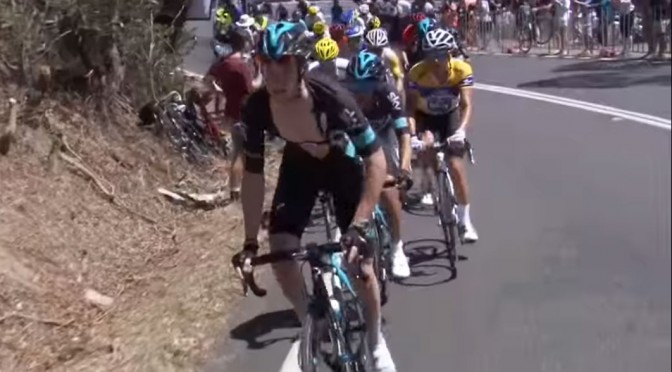
Chris Froome attacks on the final stage of the Jayco Herald Sun Tour to take the stage and the overall.
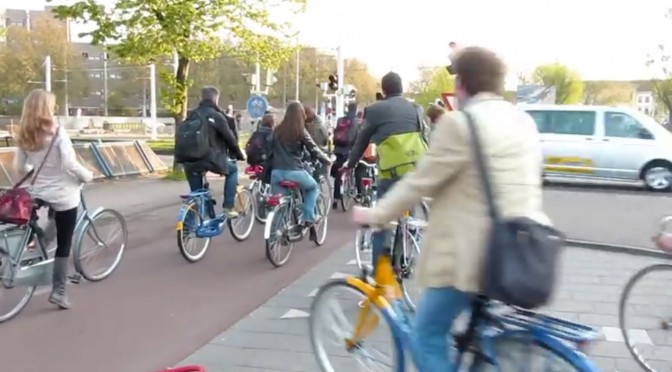
I’ve cycled in Holland, and it wasn’t was very similar to this. For a cycling novice at the time, used to riding on the other side of the road, it was quite intimidating. I got yelled at a few times and there was lots of bell ringing and shouts of “Pass Op!”
“This is an ordinary Wednesday morning in April 2010 at around 8.30 am. Original time was 8 minutes that were compressed into 2 minutes, so everything is 4 times faster than in reality. The sound is original.
This is one of the busiest junctions in Utrecht a city with a population of 300,000. No less than 22,000 bicycles and 2,500 buses pass here every day. And yet Google Street View missed it. Because private motorized traffic is restricted here.”
Video courtesy of Bicycle Dutch, and more info on cycling in the Netherlands
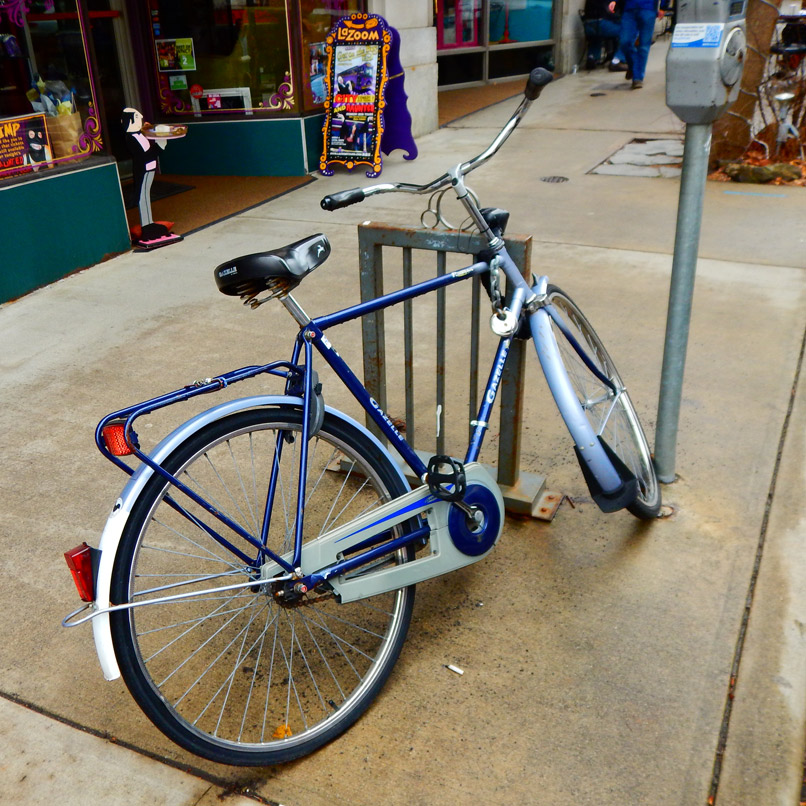
I had the pleasure of spending the weekend in Asheville NC this past weekend. While Asheville is not the bike-friendliest terrain, with plenty of steep hills, there’s lots of a bikes and cyclists, where ever you look.
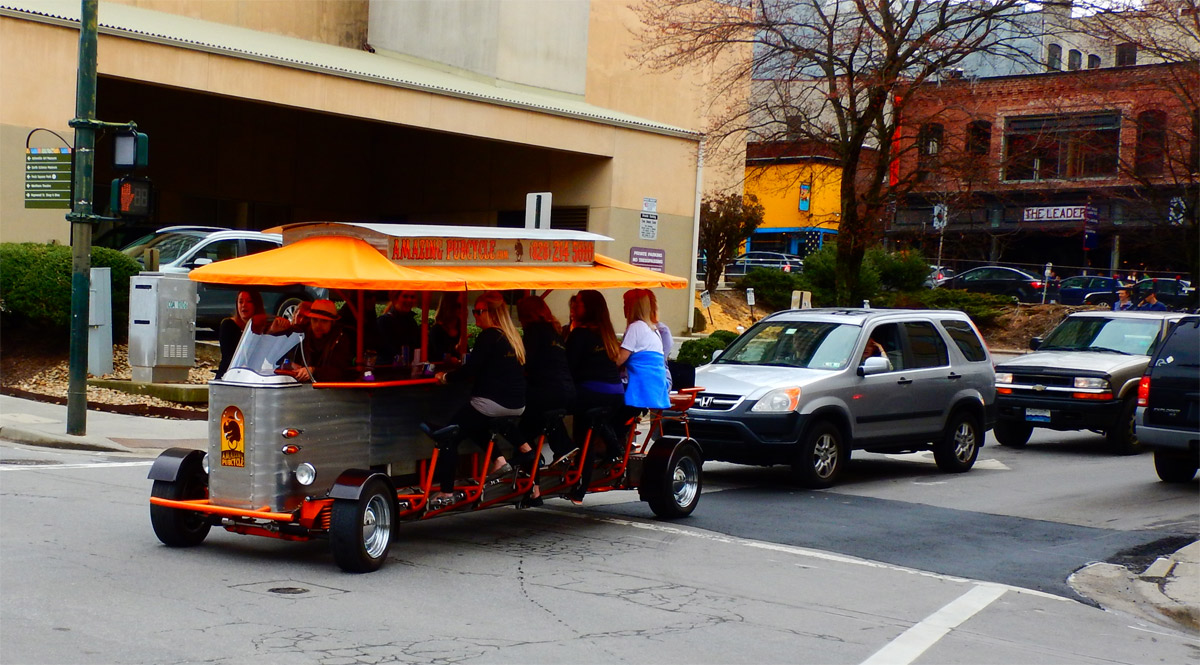
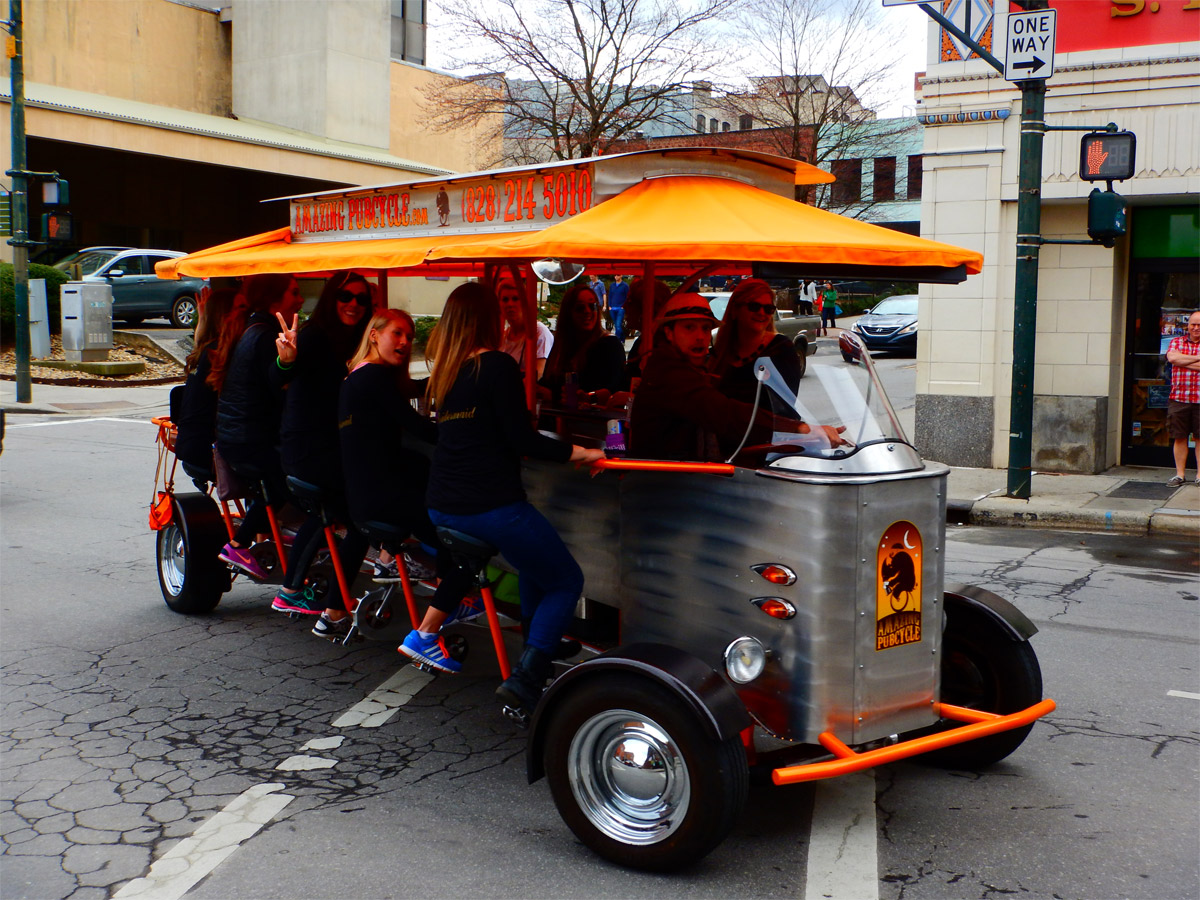
Many claim it is a myth, a figment of some drunken cyclist’s overactive imagination… but if you’re lucky, you might get a glimpse of “The Amazing Pubcycle.”
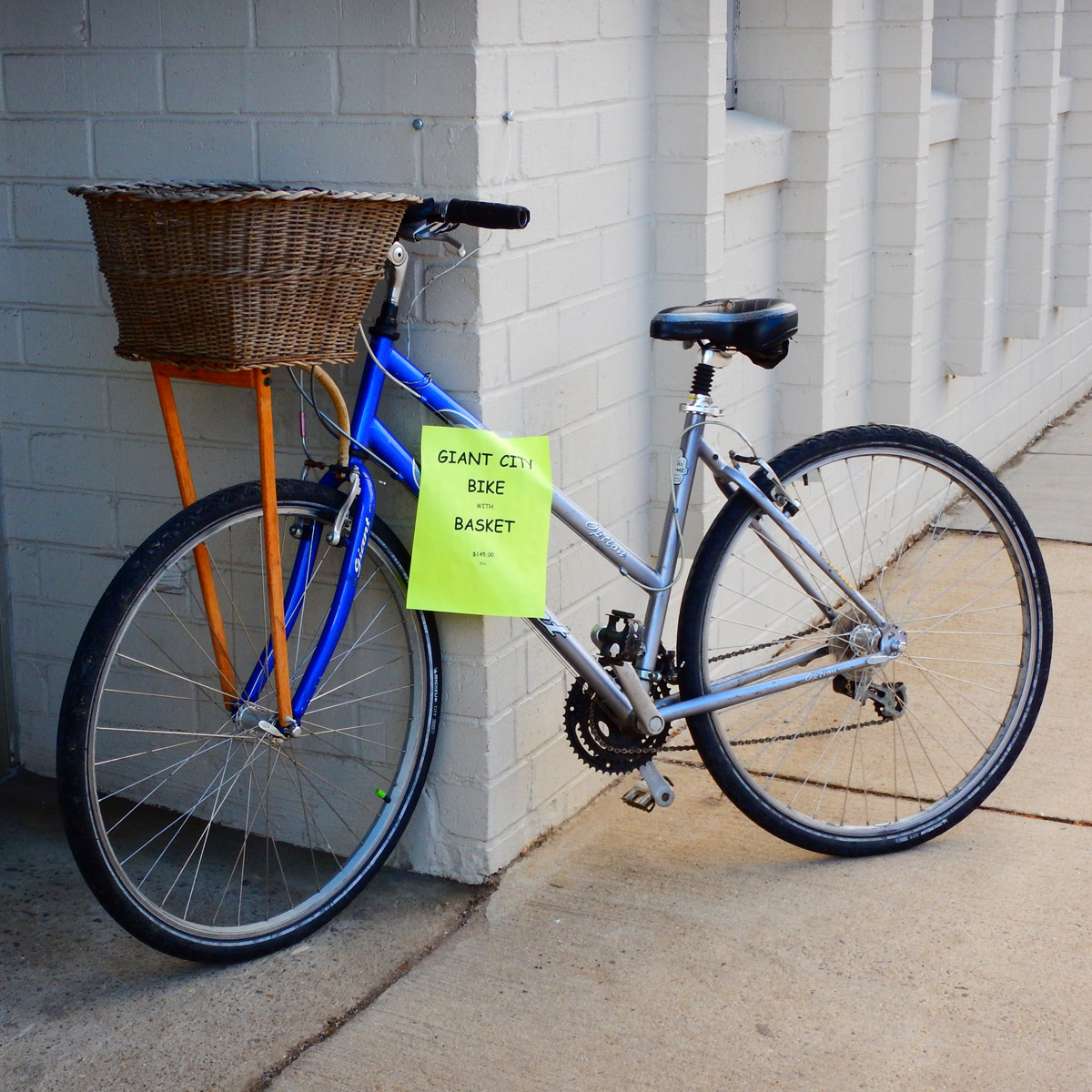
While there are quite a few serious cyclists in Asheville, this is a sampling of good old fashioned bikes… the kind you ride to get from A to B.
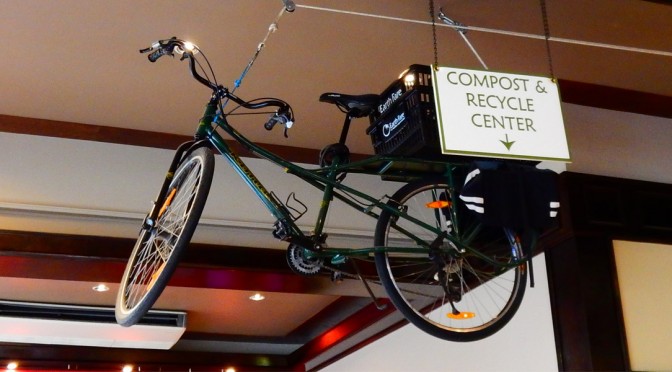
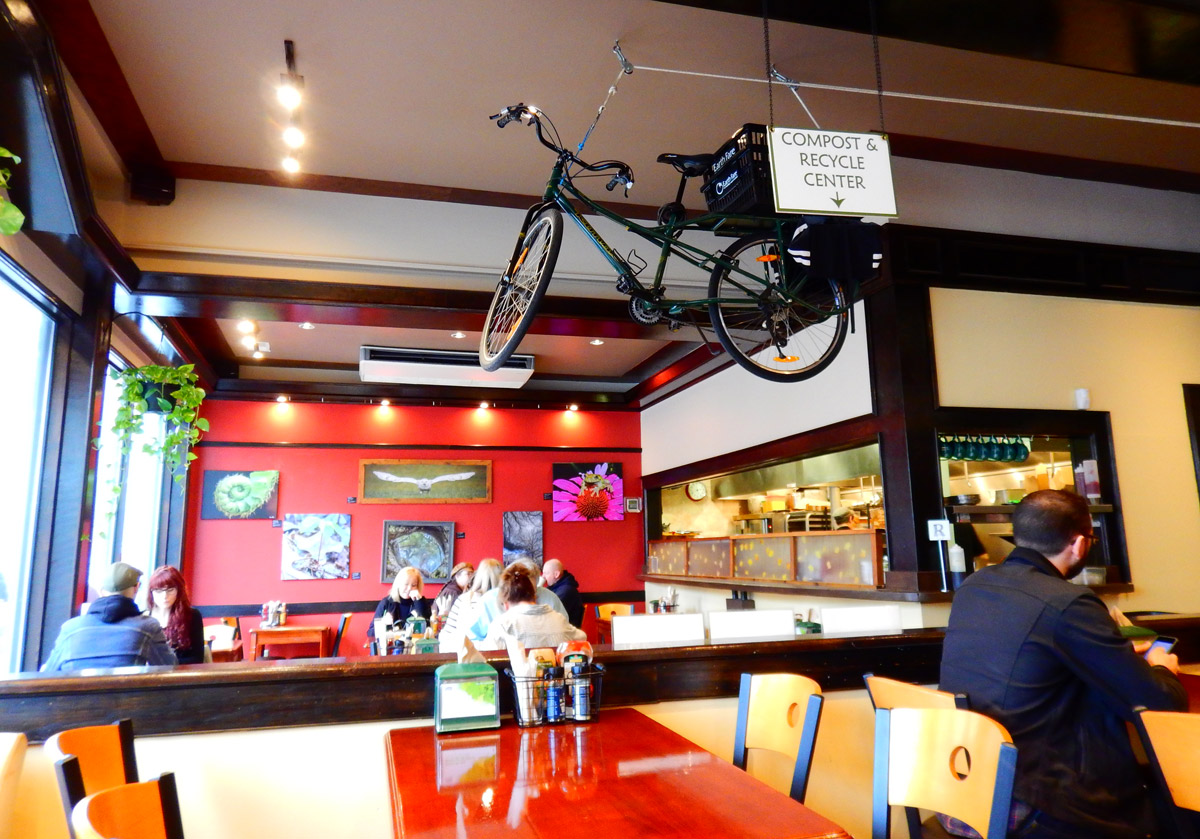
Bikes are everywhere, leaning against shop windows, in bike racks, tethered to trees and even dangling from the ceiling in a restaurant. Ashevillians do love their bikes.

Look says “yes.”
It’s the 2015 Look 795 Aerolight.
FRAME / FORK
HEADSET
SEAT POST
CRANKSET
SPROCKET
BRAKES / SHIFT LEVERS
REAR DERAILLEUR
FRONT DERAILLEUR
CHAIN
BRAKE ARMS
SADDLE
HANDLEBAR
STEM
RIBBON
PEDALS
WHEELS
TIRES
ACCESSORIES
WEIGHT