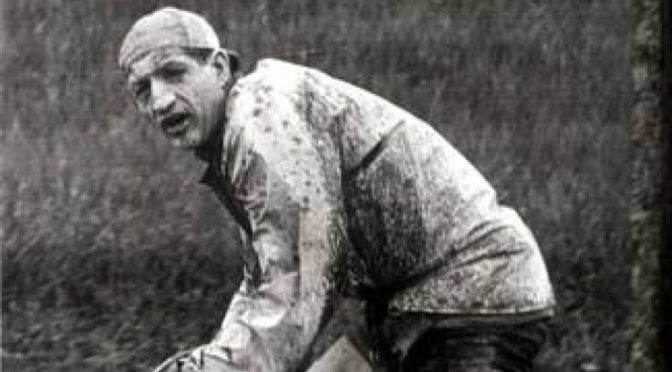
It follows an Israeli pro cycling team on a very special ride. The riders ignored their specific intense training routine and took on a 200km journey through the heart of Tuscany – starting in Florence and finishing at world heritage city of Assisi – copying the exact same route Bartali use to ride by himself.
The course, that started in Bartali’s house in Florence and ended in Assisi, took the riders along the route that Bartali rode through, while delivering fake documents for Italian Jews.
It was later discovered that Bartali did a lot more than just deliver documents. If this topic interests you I highly recommend the movie My Italian Secret. which goes into detail on Bartali’s secret life helping the Italian Resistance.
Saturday April 30 was the 9th annual Red Hook Crit in Brooklyn. There was a huge crash caused by a motorcycle stopped in the middle of the course.
https://youtu.be/E4D9e3QLI_Q
How the Red Hook Crit #9 Unfolded
“After two failed starts due to early first lap complications and crashes the race was shortened to twenty-two instead of twenty-six laps as originally scheduled. Mario Paz Duque (IRD Carerra) advanced from tenth on the grid to win his seventh Red Hook Crit Breakfast Prime. Aldo Ilesic (Allez-Allez Specialized) soon took control of the race sitting on the front with little objection from his competitors. Zawada started pushing the pace and the field was strung out, but on the third lap Zawada crashed clipping a pedal through a hairpin, and retired from the race. Ilesic still on the front looked to be riding easily though those around were struggling to match the pace…”
Originally the Red Hook Crit was an illegal race on streets of Brooklyn. It was founded as a birthday party for the founder’s friends. His friends were all racers and were always training, so in order to get them to attend his party he turned it into a crit.
The Col Collective break down this classic ride in Tenerife, a monster climb from sea level to 2250 m ride up the active volcano, Mount Teide. The volcano’s summit is at 3,718 m (12,198 ft). The summit is only accessible on foot or by cable car.
A Ride Up the Tallest Mountain in Spain
Mike Cotty (The Col Collective) leads you through this epic climb, from the coast through rugged lava fields and up to the plateau at the foot of Mount Teide. He rides a short route from El Médano on the south side, but it’s still 51 km, so you need to pace yourself.
The first half of the climb is around 4-6%, nothing too brutal. At the half way mark of Vilaflor things pick up to 11%, you’ll thank yourself if you kept your pacing in check on the first half.
The ride ends at the Parador de las Cañadas hotel, where you can reward yourself with food and drink while you soak up the stunning view.
Successful entrepreneur Howard Chang tells “Spartan Up” host Joe De Sena, why as a karate champion at 17, he switched to endurance cycling, a sport which he admits he had no natural affinity towards.
What separates entrepreneurs from the rest of us? Is it their success? Or their failure? Or their refusal to stop at failure, and recognition that strength only comes through struggle and failure?
Top Entrepreneur on How Being Bad at Something Helps You Get Good
You might also like…
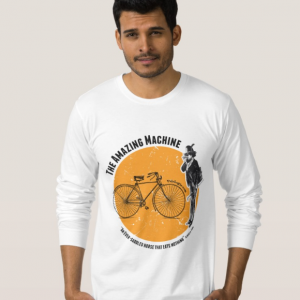
"The Amazing Machine" tee shirt highlights what a simple but fascinating machine the bicycle really is with the quote: "an ever-saddled horse that never eats."Unique and Cool Gifts for Cyclists
A collection of unique gift ideas for the cyclist in your life, sure to amuse, entertain and thrill.
These are gifts that will remind them of their passion and of you for years to come.
Read: Gift Ideas for Cyclists
You can count on Paris-Roubaix to deliver drama, dirt, distress and more. This year’s 114th edition of Paris-Roubaix was no different.
History of Paris-Roubaix
“Paris–Roubaix from its beginning in 1896 until 1967 it started in Paris and ended in Roubaix; in 1966 the start moved to Chantilly and since 1977 it starts in Compiègne (about 85 kilometres (53 mi) north-east from Paris centre). The finish is still in Roubaix. …
Famous for rough terrain and cobblestones… it has been called the Hell of the North, a Sunday in Hell (also the title of a film about the 1976 race), the Queen of the Classics or la Pascale: the Easter race.”
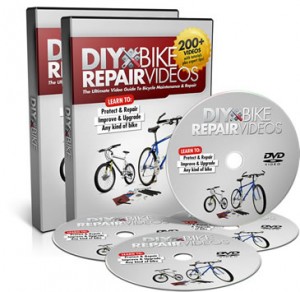
Whether you want to learn more about your bike, feel confident on the road, save money, or you're considering becoming a pro bike mechanic, this bicycle repair course has got you covered.
Taught by pro bike mechanics and packed with insider shortcuts and tips, it covers everything from minor repairs to the heavy stuff... and makes it easy to follow along, step-by-step, so you're never confused or wondering what to do next.
If you want to have an entire video encyclopedia of bicycle repairs at your fingertips, that covers you in every situation, then this package is worth a close look.
"Much easier to follow than a book, comprehensive, and loaded with insider tips and shortcuts... these DVDs belong on every cyclist's bookshelf." -Velo Logic
Nacer Bouhanni and Michael Matthews collide in Paris-Nice and somehow manage to keep it upright.
https://youtu.be/PzwSaR18suE
After officials reviewed the footage, Nacer Bouhanni was relegated to third position.
Snow Day for the Peloton
Stage 3 of Paris-Nice was cancelled due to heavy snow. VeloNews reports:
Snow and cold forced organizers to cancel Wednesday’s third stage at Paris-Nice. Conditions worsened midway through the seven-climb stage, prompting officials to neutralize, and then cancel the stage.
“The road was very slippery and safe conditions could not be assured,” the ASO’s Christian Prudhomme said, explaining the decision to first neutralize and then cancel the stage. Road conditions worsened as the course climbed the Cote des Écharmeaux at 714m (2,343 feet), a little more than halfway through the lumpy, 168km third stage from Cusset to Mont Brouilly.
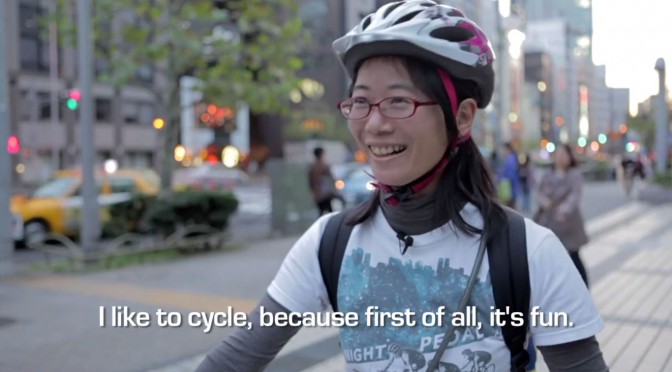
Cycling in Tokyo is a bit of a paradox. There’s only about 6 miles of cycling lanes in Tokyo, a tiny amount for a huge international city, yet many people ride their bikes in this densely populated city without a second thought. Why?
This StreetFilm video offers an explanation.
You might also like…
"The Amazing Machine" tee shirt highlights what a simple but fascinating machine the bicycle really is with the quote: "an ever-saddled horse that never eats."Unique and Cool Gifts for Cyclists
A collection of unique gift ideas for the cyclist in your life, sure to amuse, entertain and thrill.
These are gifts that will remind them of their passion and of you for years to come.
Read: Gift Ideas for Cyclists
I remember the moment a few years ago while watching TV when I realized that if I were riding in the Tour de France, at age 42 I’d be the oldest person in the race. It hit me that my dream of racing in cycling’s biggest event was over…it was not going to happen.
Not that I’d been competing, let alone training seriously, on the bike for a number of years.
Or that not even in my “prime” years for competitive cycling would I have been good enough. It’s just that now I had an excuse…. I was too old, too far past my prime years.
So what happened? Is there a physiological reason people in their mid-40’s are no longer able to compete at the professional level in most sports, or is it a constellation of challenges, such as the time devoted to training, motivation, managing kids’ schedules or busy work demands?
“I’m old” is the common refrain for why we get worse at athletics as we age. But here’s what’s really happening in the body through the years to make world-class performance less possible. And, interestingly, there are a few physiological elements that contribute to athleticism that don’t seem as affected by aging.
The ‘sweet-spot’ age
In most sports, there is an age “sweet spot,“ at which the combination of physical, technical and strategic abilities comes together.
In most sports, this age sweet spot falls in the mid-20’s to early 30’s. Although there have been numerous examples of Olympians competing, and sometimes winning medals, over the age of 50, the vast majority of these come from sports requiring exceptional skill and less aerobic or anaerobic power, such as the shooting events, sailing, equestrian and fencing.
For endurance events, the upper cap for competing at the sport’s highest levels appears to be around the age of 40.
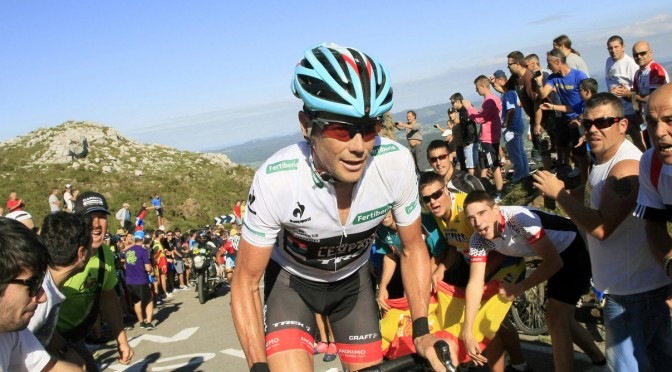
Chris Horner won the 2013 edition of the Vuelta a Espana, Spain’s version of the Tour de France, just shy of his 42nd birthday, making him the oldest winner of a Grand Tour in cycling.
The oldest Olympic marathon winner was the 38-year-old Romanian athlete Constantina Dita Tomescu, competing at the Beijing Olympic Games.
Dara Torres, at the age of 41 in 2008, is the oldest swimmer to compete in the history of the Olympics, missing the gold medal in the 50-meter freestyle by hundredths of a second. But these examples are the exceptions, not the rule.
Dara Torres during US Olympic swimming trials in 2012. Jeff Haynes/Reuters
Age changes how our bodies use oxygen
One big reason we see declines in aerobic (or endurance) athletic performance with age is that our bodies can’t use oxygen as effectively.
The maximal ability to utilize oxygen (VO2max) is a predictor of endurance performance across ages. VO2max is a numerical value that describes how much oxygen your body can use per kilogram of body weight.
VO2max is affected by how well your body can bring oxygen into the lungs, how well this is carried in our blood to the working muscles, and how much oxygen the muscles can use to fuel contraction.
Exercise can improve all of these, and the higher the VO2max, the more “aerobically fit” a person is. That is, they can do more endurance work for their body weight.
In the general population, VO2max tends to decline by about 10% per decade after the age of 30. Athletes who continue to compete and train hard can reduce the drop by about half, to 5% per decade after the age of 30.
The reason VO2max declines with age is that our maximal heart rates go down as well.
Maximal heart rate is the highest heart rate in beats per minute one can achieve during increasing intensity of endurance exercise. It is often roughly predicted as “220 – age = maximal heart rate.” Although the actual maximal heart rate for a given person is highly variable, as you age, your maximal heart rate decreases, whether you are a highly fit athlete or a couch potato.
And this decrease reduces both cardiac output and oxygen delivery to the muscles, which translates to a lower VO2max and thus to lower performance in endurance events as we age.
Even if oxygen delivery to muscles goes down, the ability of your muscles to efficiently utilize the oxygen they do get relative to a given workload (this is called exercise economy) is well maintained into our 60’s and 70’s, though total muscle mass tends to decline as we age, and can contribute to declines in performance as well.
In terms of competitive endurance exercise, rowers have shown the least decline in VO2max with age, but the difference to other sports isn’t huge. And it might be because rowing is a lower-impact sport than cycling (with crashes) and running (constant pounding).
Some evidence suggest that for sports that require high levels of strength or power, like weightlifting, age-related limitations may reside in our skeletal muscles, those muscles that move our bones and joints.
For competitive weightlifters over the age of 40 (masters level), performance drops more precipitously than it does for endurance athletes such as runners, swimmers and cyclists. That’s likely because weightlifting draws on type II muscle fibers (called “fast-twitch” muscles) to produce strength and power. Research indicates that these cells decline in number and function with age.
These age-related declines are not as obvious in type I muscles, those muscle fibers most associated with endurance-type exercise.
Recovery can take longer
As they age, many athletes complain that the ability to recover from hard bouts of exercise diminishes.
This can affect the intensity and volume of training of all athletes. But in many contact sports, such as professional American football or rugby, recovering from injuries and the cumulative effects of hard hits becomes the limiting factor in continuing to play at the highest level.
For instance, last season there were only two people in the NFL, Sav Rocca of the Washington Redskins and Adam Vinatieri of the Indianapolis Colts, playing in their 40’s.
Injuries take their toll on people playing non-contact sports as well. For masters athletes, experiencing more training-associated injuries leads to reduced training intensity and volume, and thus poorer performance come race day.
Indianapolis Colts kicker Adam Vinatieri. Pat Lovell-USA TODAY Sports/Reuters
Better training can help you stay at your peak longer
Although all athletes will eventually lose the age versus performance race, with better training and recovery practices, in the coming years we likely will begin to see more athletes in their 40’s remaining competitive at the highest levels of sport. By “training smarter, not harder,” athletes can reduce the chances of injuries, maximize gains from training and minimize the effects of aging.
Older athletes need longer to recover and adapt to a training stimulus, so workout planning needs to change with age.
High-intensity interval training, for instance, focuses on the quality of a workout, rather than the sheer volume of training, and can be used effectively by older athletes to improve aerobic capacity.
Cross-training, such as weightlifting and yoga, can help to maintain muscle mass and flexibility, and reduce overuse injuries in endurance athletes.
An emphasis on “active recovery” strategies (an easy run or swim on your rest days) and improved sleeping habits are important for athletes of all ages, but become essential for older athletes.
Performance decline isn’t just about physical changes, however. As we age, our intrinsic motivation to train diminishes. Even in athletes, the motivation to train may shift somewhat from setting personal records to remaining active and healthy. And that’s a great motivation for any athlete at any age.
Fast After 50 is a complete training program for the older racer – stay strong and competitive as long as you ride!
You do not have to suffer a decline in performance as you age, not if you training right. Fast After 50 is a complete training program to keep you racing competitively no matter how old you are. Clear and authoritative, Friel gives you clear guidance and a plan to keep you performing at your best. Stay Fast and Feared After 50!
However, the stability – that is, the ability to remain balanced – of a bicycle with a rider is more difficult to quantify and describe mathematically, especially since rider ability can vary widely. My colleagues and I brought expert and novice riders into the lab to investigate whether they use different balancing techniques.
The physics of staying upright on a bicycle
A big part of balancing a bicycle has to do with controlling the center of mass of the rider-bicycle system. The center of mass is the point at which all the mass (person plus bicycle) can be considered to be concentrated. During straight riding, the rider must always keep that center of mass over the wheels, or what’s called the base of support – an imaginary polygon that connects the two tire contacts with the ground.
Bicycle riders can use two main balancing strategies: steering and body movement relative to the bike. Steering is critical for maintaining balance and allows the bicycle to move to bring the base of support back under the center of mass. Imagine balancing a broomstick on one hand – steering a bicycle is equivalent to the hand motions required to keep the broomstick balanced. Steering input can be provided by the rider directly via handlebars (steering torque) or through the self-stability of the bicycle, which arises because the steer and roll of a bicycle are coupled; a bicycle leaned to its side (roll) will cause a change in its steer angle.
Body movements relative to the bicycle – like leaning left and right – have a smaller effect than steering, but allow a rider to make balance corrections by shifting the center of mass side to side relative to the bicycle and base of support.
Steering is absolutely necessary to balance a bicycle, whereas body movements are not; there is no specific combination of the two to ensure balance. The basic strategy to balance a bicycle, as noted by Karl von Drais (inventor of the Draisine), is to steer into the undesired fall.
Newbies versus pros
While riders have been described using mathematical equations, the equations are not yet useful for understanding the differences between riders of different ability levels or for predicting the stability of a given rider on a given bicycle.
Therefore, the goal of my colleagues’ and my recent work was to explore the types of control used by both novice and expert riders and to identify the differences between the two groups. In our study, expert riders identified themselves as skilled cyclists, went on regular training rides, belonged to a cycling club or team, competed several times per year, and had used rollers for training indoors. Novice riders knew how to ride a bicycle but did so only occasionally for recreation or transportation and did not identify themselves as experts.
We conducted our experiments in a motion capture laboratory, where the riders rode a typical mountain bike on rollers. Rollers constrain the bicycle in the fore-aft direction but allow free lateral (left-right) movement. They require a bicycle rider to maintain balance by pedaling, steering and leaning, as one would outdoors.
A subject preparing to ride the instrumented bicycle in our experimental setup.Stephen Cain, CC BY-ND
We mounted sensors and used a motion capture system to measure the motion of the bicycle (speed, steering angle and rate, roll angle and rate) and the steering torque used by the rider. A force platform underneath the rollers allowed us to calculate the lateral position of the center of mass relative to the base of support; that let us determine how a rider was leaning.
We found that both novice and expert riders exhibit similar balance performance at slow speeds. But at higher speeds, expert riders achieve superior balance performance by employing smaller but more effective body movements and less steering. Regardless of speed, expert riders use smaller and less varying steering inputs and less body movement variation.
We conclude that expert riders are able to use body movements more effectively than novice riders, which results in reducing the demand for both large corrective steering and body movements.
Mysteries remain
Despite our work and that of others in the field, there is still much to be learned about how humans ride and balance bicycles. Most research, including ours, has been limited to straight line riding, which only makes up a fraction of a typical bicycle ride.
Our work reveals measurable differences between riders of different skill levels. But their meaning is unclear. Are the differences linked to a higher risk of crashing for the novice riders? Or do the differences simply reflect a different style of control that gets fine-tuned through hours and hours of training rides?
Ideally, we would like to identify the measurements that quantify the balance performance, control strategy and fall risk of a rider in the real world.
With such measurements, we could identify riders at high risk of falling, explore the extent to which bicycle design can reduce fall risk and increase balance performance, and develop the mathematical equations that describe riders of different skill levels.
You might also like…
Easily Fix Annoying Problems and Make Your Bike Sing...
DIY Bike Repairs video course, you will save a bundle, and never be stumped by a bike repair again. This complete video course of bicycle repairs covers everything, from major upgrades to minor maintenance work. This professionally shot course is put together by pro bike mechanics, and is packed with insider’s tips and short cuts. The course comes with lifetime updates and a money-back guarantee, so there's no reason not to give it a try.