If you want to perform at your best, and get the most from your training, then listen up….
Team Wiggins nutritionist David Dunne, spills the beans on how to fuel your body for max recovery and performance, and suggests some great meals and recipes.
The message is that the type of training determines the fuel. Rule #1 for instance, recommends not loading up on carbs for a long, steady ride where you are targeting physical adaption not performance; instead go with a high protein meal that supports muscle regrowth.
Worth a read… and may stop you chugging down sugar-loaded energy bars in favor of some real food.
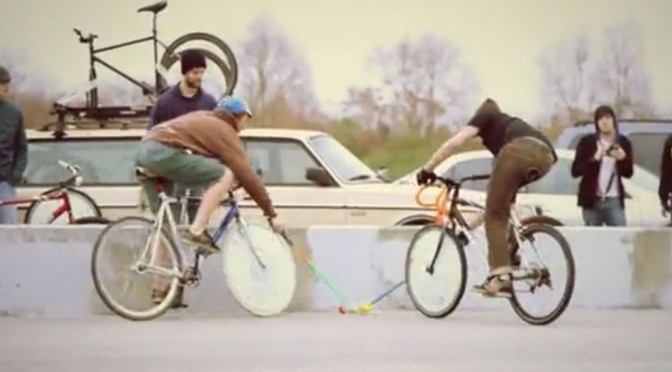
It started in the 19th century, featured as an exhibition sport in the 1908 Olympics, it blossomed in England in the 1930s and gained traction in the United States in the 1980s and 90s.
It’s cycle polo. And it hasn’t changed much. Playing requires superb bike handling skills in tight spaces, excellent coordination, and the ability to weather frequent crashes.
Video: Cycle Polo Today:
Cycle Polo’s Origins
Cycle Polo has been around almost as long as the bicycle. I have read a couple of accounts, one a romantic story of how stablehands in colonial India were forbidden from riding the horses so they took to bicycles to play the “sport of princes.” Wikipedia has a different account:
“The game was invented in County Wicklow, Ireland, in 1891 by retired champion cyclist Richard J. Mecredy, editor of The Irish Cyclist magazine. In October of that year the first cycle polo match was played at the Scalp (County Wicklow) between Rathclaren Rovers and the Ohne Hast Cycling Club. Towards the end of the 19th century the game reached Great Britain, France, and the United States where the American Star Bicycle was a popular mount. The first international match was played between Ireland and England in 1901. Cycle polo was a demonstration sport at the 1908 London Olympics with Ireland winning the gold, beating Germany.”
Here’s some photos of cycle polo through the ages, Bicycle Polo Recycled – collection of images from Prince Phillip playing in the 1960s to modern day London games on hard courts.
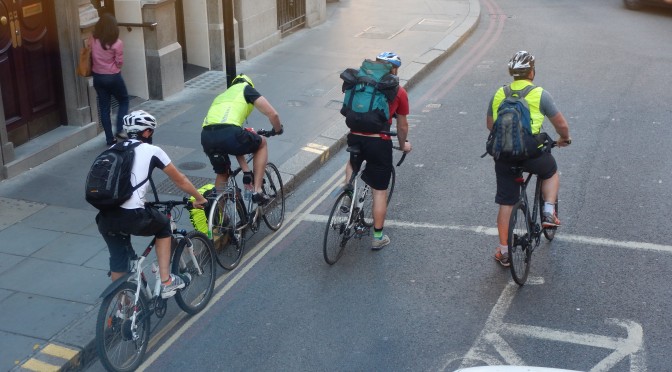
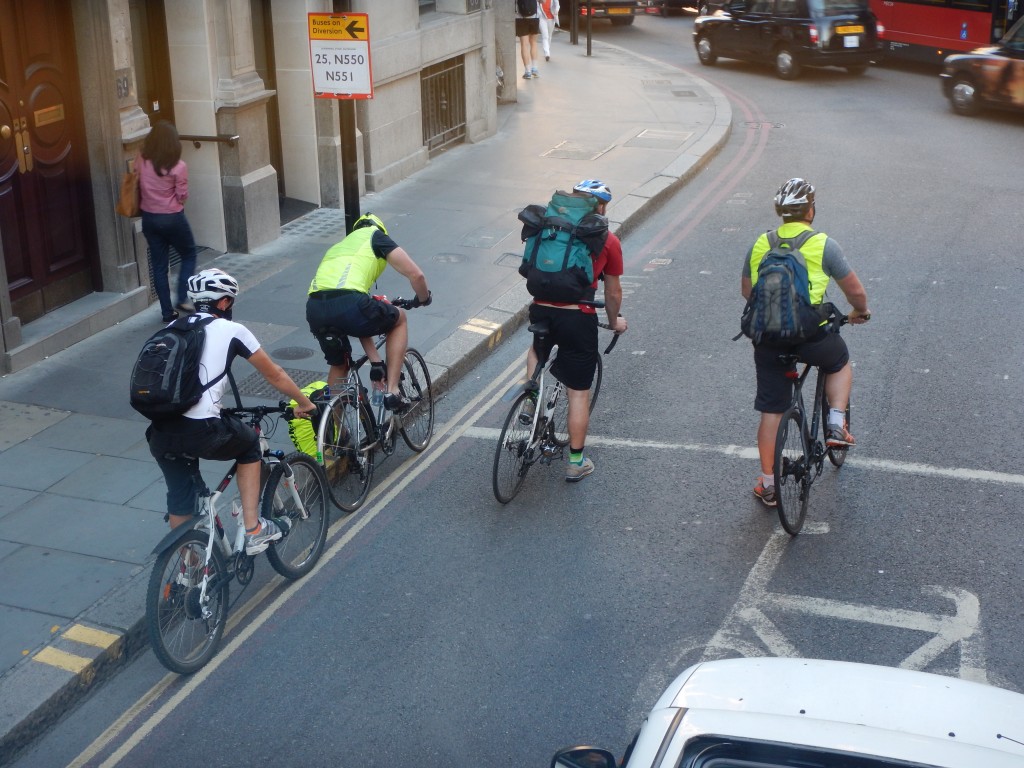
This does not surprise me. When I was over in London last year, we took a walk to a local pub. My daughter and I counted the cyclists we saw on the way there and on the walk back. We counted over 110. Most of them looked like commuters.
Cyclists in Trafalgar Square London. Photo by author, July 2014.
They are everywhere. There’s no shortage of cyclists in the center of London mixing it up in Trafalgar Square, thick with taxis and buses. We also came across a string of cyclists in a mid-week time trial on a rainy day out in the country.
My local city, Charlotte, much much smaller and much less traffic, and with very few cyclists comparative to London averages 1-4 deaths a year. The bustling, chaotic and sprawling London which is thick with cyclists has had just 8 fatalities so far this year. That seems mighty low.
I rode in London in the 90’s while living there, commuting to work, but it wasn’t smack bang in the middle of the city, though my wife and I took a few weekend trips into a busy part of town. We were a bit nervous at first but got over it quickly and I don’t remember any close calls, not like here.
Certainly the cycle lanes contribute to safety, but I’m pretty sure the sheer number of cyclists on the road dramatically raises the awareness of drivers, and makes them more cyclist-sensitive. Whereas here, they look but don’t see.
What you see is strongly influenced by what you’re looking for, and around here most drivers are just not expecting a cyclist, aren’t looking for them and consequntly don’t see them.
And when they do see them, reactions vary from: from curiosity, “OMG! WTF is that?” to amazement, “cool, look a cyclist!!” …and to anger, “What the hell is this kid doing with his toy on the roads?!!”
I’m sure there’s many lessons we can learn from London.
I think so-called “mechanical doping” is very different to traditional chemical doping. And the difference is such that it makes mechanical doping far less likely than normal doping.
Traditional Doping: It’s All About the Rider
Doping actually changes a rider’s physiology and transforms him into a stronger and faster rider. He can get on any bike and take on anyone and kick ass. His human performance is elevated, even if it is ultimately thanks to some alien substances in his body.
It’s virtually indistinguishable from the rider being naturally strong and a highly trained elite athlete.
Mechanical Doping: It’s All About the Bike
Mechanical doping transforms the bike. It does nothing for the rider, and with the right mechanics he could even be a complete wimp. He just needs to know where the switch is turn.
So while these forms of doping are both cheating, there’s a big philosophical and psychological difference.
There’s some degree of honor and in the rider being stronger, there’s none what so ever in your bike having a motor.
Mechanical doping is just flat out cheating with no upside for the rider apart from a stolen win. I can see an elite athlete being tempted to dope, I can’t see such an athlete sticking a motor on his bike.
There’s also the problem of conspiracy. A doper can dope privately and independently of the team. That’s highly unlikely in the case of mechanical doping, the mechanics at the least would have to be in on it.
And what if you have a mechanical for real and the team car can’t get to you in time? Your bike is going to be suspiciously heavy to anyone that touches it.
Recent Mechanical Doping Conspiracy Theories
There’s been a few, of course Cancellara’s Roubaix win was a big one, but there have been many more… Google “mechanical doping”.
At the time of this writing, “mechanical doping” conspiracy theories erupted after a Movistar mechanic “hides” broken bike in team car…
It’s half way through the Vuelta and today’s stage is a monster! With 6 categorized climbs and a summit finish, we’re bound to see some serious time gaps open/close. Who’s relishing it and who’s dreading it?
One of China’s richest men just bought the World Triathlon Corporation and with it the Ironman. Will cycling be next?
Steve Maxwell and Joe Harris write in VeloNews:
Dalian Wanda now has access to more than a quarter-million licensed triathlon participants, and is well-positioned to spur innovation and capitalize on a global marketing initiative to grow the sport even further. Ironman already has rock-solid and protected intellectual property rights, which includes the right to host its own world championship in Kona, Hawaii. It has a proven monetization model and virtual control of the sport’s strategic direction.
On the other hand, pro cycling is still as financially fractured and economically unsustainable as it was 50 years ago. There is no consolidation of events into a coherent business structure, and only a small handful of top-level WorldTour events make any money at all. This financial uncertainty and lack of coherent exposure puts the sport in a perpetually unstable situation. Sponsors whose teams don’t make the cut for the single iconic and profitable event — the Tour de France — are quick to exit. Teams and races come and go with alarming regularity.
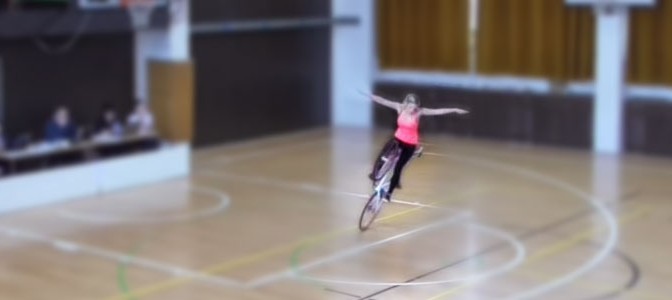
22 year old Nicole Frýbortová from Czechoslovakia can do things on a bicycle you’ve never imagined.
Nicole Frýbortová – EMS Cup Performance
https://www.youtube.com/watch?v=P3WnQ246f1g&rel=0
Nicole Frybortova is an “artistic cyclist,” a sport that has been around in some form for over a hundred years.
According to Wikipedia:
Artistic cycling is a form of competitive indoor cycling in which athletes perform tricks (called exercises) for points on specialized, fixed-gear bikes in a format similar to ballet or gymnastics. The exercises are performed in front of judges in five minute rounds by singles, pairs, four- or six-man teams.
The first men’s world championships were held in 1956, the first women’s in 1970.
It wasn’t long ago when Pantani rode a sub 16 lbs bike (aluminum no less!) that astonished the cycling world, and if I recall correctly, ushered in a minimum weight limit shortly after.
15 years later and bike technology and material has come a long way. Now German lightweight wheels specialist, AX-Lightness, has built a frameset and adorned it with their components to produce a bike that weighs a feathery 9 lbs! It’s quite a looker too.
Now there are lighter bikes, but those are one-offs, usually not economical, and are not available for the mass market.
Mastering Your Mindset for Improved Cycling Performance
A quick follow up to yesterday’s post on mindset…. Out soon, a promising new book on maximizing performance with your mind. It’s available for pre-order now, check it out:
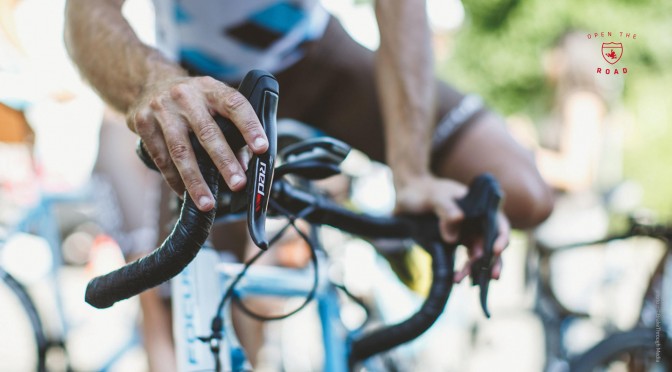
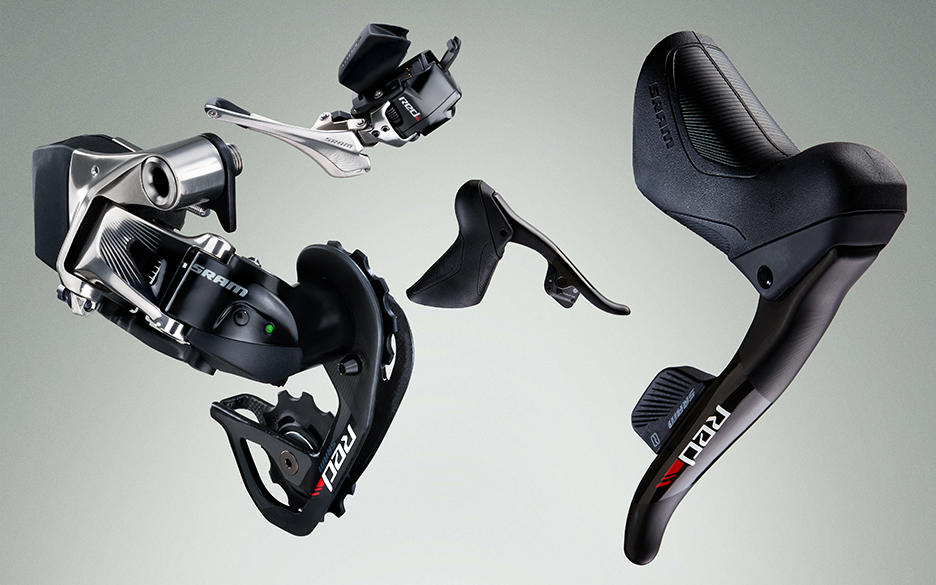
When you think about it, shifting gears on a bike is confusing as heck, levers work differently depending on whether you shifting front chain rings or rear sprockets. That made sense given the mechanical and human constraints. Electronic shifting has removed those limitations yet shift logic remained the same. Until now.
VeloNews reports on the simple intuitiveness of SRAM’s new eTap shift logic versus traditional shifting:
Shimano: On the right side, press the bottom paddle for a harder gear and the upper button for an easier gear. On the left side, push the upper button for a harder gear, and the lower paddle for an easier gear.
SRAM eTap: Press the right button for a harder gear, the left button for an easier gear, and both for a front shift.